










Shatavari in Ayurveda: Traditional Uses, Benefits & Properties
Key points
- Shatavari (Asparagus racemosus) is a cooling, nourishing root herb, best known for women’s health but traditionally used by men and women alike.
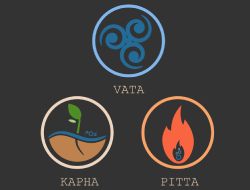
- Ayurveda classes it as a Rasayana (rejuvenative) and uses it to balance Vata and Pitta.
- Human research is still early. The most promising studies concern menopausal symptoms.
- It isn’t suitable for everyone. Seek advice first if you are pregnant, breastfeeding, taking medication or managing a hormone-sensitive condition.
Shatavari (Asparagus racemosus) is one of the most valued medicinal herbs in Ayurveda, traditionally used to support nourishment, vitality and healthy ageing. Although best known for its role in women’s health, Shatavari has a much broader role in Ayurvedic medicine, with applications for digestion, tissue nourishment, and general wellbeing in both men and women.
Its name is commonly interpreted as “she who possesses a hundred husbands”, reflecting its historical association with female reproductive vitality. However, Shatavari is not exclusively a women’s herb. Its cooling, nourishing and rejuvenating qualities have made it an important part of traditional Ayurvedic practice for centuries.
What Is Shatavari?
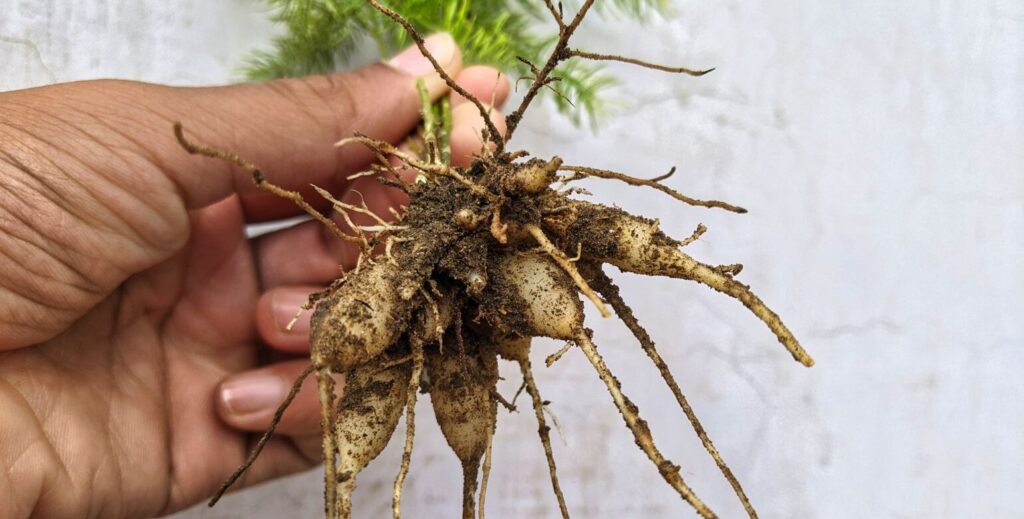
Shatavari is a climbing plant of the Asparagaceae family, native to India and South Asia. Ayurvedic preparations use its fleshy, tuberous roots. They contain steroidal saponins known as shatavarins, flavonoids and polysaccharides (including mucilage).
Shatavari’s Properties in Ayurveda
Ayurveda describes herbs by their taste (Rasa), qualities (Guna), energetic effect (Virya) and post-digestive effect (Vipaka). Shatavari is traditionally described as:
- Rasa: sweet (Madhura) and bitter (Tikta)
- Guna: heavy (Guru) and unctuous (Snigdha)
- Virya: cooling (Sheeta)
- Vipaka: sweet (Madhura)
In short: sweet, cooling and nourishing. These properties are the traditional basis for using Shatavari to balance Vata and Pitta. Its unctuous quality is thought to counter Vata’s dryness and depletion, while its cooling nature soothes excess Pitta.
Because it is heavy, it may not suit people with a predominantly Kapha constitution or weak digestion.
Shatavari as a Rasayana
Rasayana refers to practices and preparations for rejuvenation, resilience and healthy ageing. The focus is on keeping the body’s tissues (Dhatus) well nourished, not simply on extending life.
Classical texts link Shatavari with nourishing Rasa Dhatu (the fluid, nutritive tissue) and the reproductive tissues (Shukra and Artava). It is also associated with Stanya, or breast milk. These qualities are valued in men and in older adults as well as in women.
Traditional Uses
Women’s Health
Shatavari has a long history of use in Ayurvedic formulations intended to support female reproductive wellbeing. It is traditionally associated with menstrual health, reproductive tissue nourishment and the changes that accompany menopause.
Its historical uses also include supporting lactation after childbirth, although modern research into this application has produced mixed findings. Recent clinical studies have investigated standardised Shatavari extracts for menopausal symptoms, with some encouraging early results.
For more detail, see our article on Shatavari for Women’s Health, Skin and Rejuvenation.
Digestion
Shatavari is classed as a soothing herb for the digestive tract and is traditionally chosen when symptoms are seen as Pitta-related, such as a sense of internal heat or irritation. The root’s mucilage becomes slippery in water, which is the basis of its reputation as a demulcent (soothing) herb. Classical uses include supporting digestive comfort and nourishing the gastrointestinal tissues.
Strength, Stress and Immunity
Shatavari is traditionally described as Balya, meaning it promotes strength and supports physical vitality. This is not a stimulant effect. It reflects slow, steady support, traditionally for older adults or people recovering from physical strain. It is also included in formulations aimed at calming the restlessness Ayurveda attributes to aggravated Vata or Pitta.
How Is Shatavari Traditionally Prepared?
Shatavari may be used alone or combined with other Ayurvedic herbs, depending on the individual’s constitution and intended purpose.
Common preparations include:
- Churna (powder): dried root powder, traditionally taken with warm water or milk.
- Capsules and tablets: modern forms containing root powder or standardised extract.
- Decoction: the root gently simmered in water.
- Shatavari Ghrita: medicated ghee prepared by Ayurvedic methods.
- Massage oils: used externally in traditional skin and massage routines.
Different preparations may not have identical effects. Their composition, concentration, and intended uses may vary considerably.
What Does Modern Research Say About Shatavari?
Research so far has focused on shatavarins and polysaccharides. Preclinical work points to possible hormonal, digestive, antioxidant and immune effects. Human clinical research is developing, particularly in the area of menopausal wellbeing.
Three recent randomised, placebo-controlled trials have tested the same standardised Shatavari root extract (300 mg daily, more than 10% shatavarins). In 80 women with perimenopausal symptoms, eight weeks of the extract improved menopause symptom scores, hot flushes and perceived stress compared with placebo (Mahajan et al., 2025). In 135 women in a sexual wellbeing trial, Shatavari alone improved overall sexual function scores and sexual distress, with larger changes when it was combined with ashwagandha (Ademola et al., 2026). In a 12-week pilot trial of 70 women with polycystic ovary syndrome (PCOS), the extract reduced follicle count, increased endometrial thickness and lowered perceived stress, but did not significantly change ovarian volume, reproductive hormones or metabolic markers (Mhatre et al., 2026). These results are encouraging but early. The trials were small and short, and they used one manufacturer’s extract with overlapping research teams, so independent replication is needed. Results from this extract also can’t be assumed for other Shatavari products.
References
- Mahajan S, Avad P, Langade J. Efficacy and safety of Shatavari (Asparagus racemosus) root extract for perimenopause: randomized, double-blind, placebo-controlled study. Int J Womens Health. 2025;17:4057-4073. https://doi.org/10.2147/IJWH.S544267
- Ademola J, Mahajan S, Srivathsan M, Langade D. Effects of Shatavari (Asparagus racemosus) root extract on sexual wellness in women: findings from a prospective, randomized, double-blind, three-arm, parallel-group, placebo-controlled study. Int J Womens Health. 2026;18:561213. https://doi.org/10.2147/IJWH.S561213
- Mhatre Y, Jadhav P, Malik A, Srivathsan M, Langade D. Efficacy and safety of Shatavari root extract in women with polycystic ovarian syndrome: a randomized, double-blind, placebo-controlled trial. Front Endocrinol. 2026;17:1769773. https://doi.org/10.3389/fendo.2026.1769773
Shatavari and the Individualised Ayurvedic Approach
Shatavari illustrates an important principle of Ayurvedic medicine: the value of a herb depends not only on its traditional properties, but also on the individual receiving it.
At Yatan Holistic Ayurvedic Centre in Sydney, we consider each person’s constitution, dosha balance, digestion, diet, lifestyle and health concerns before recommending any herb. Shatavari may form part of a personalised formulation or wellbeing program where appropriate, alongside conventional healthcare. A consultation is the best way to explore whether it is right for you.
Learn More About Our Ayurvedic Consultations

*Discover holistic healing with a complimentary phone or video consultation from our expert Ayurvedic practitioner. Start your path to better health today!*
Related Posts