
















Vedic Astrology Reading in Sydney (Jyotish Birth Chart)
Trusted by 250+ women in Australia

4.6/5 (Google Reviews)

Holistic Approach Supporting Long-Term Wellbeing

Personalised Ayurvedic Care

In-Clinic Sydney & Telehealth Consultations

30+ years Professional Experience
Quick Answer
A Vedic astrology (Jyotish) reading looks at your birth chart, drawn from your exact date, time and place of birth, to describe your nature and the timing of the periods ahead in career, money, relationships and family. At Yatan in Gordon, Sydney, a reading takes 50 minutes and costs $270, which includes preparing your chart before you arrive. Readings are also available by phone or video anywhere in Australia
Book your free 10-minute call
 1300 552 260
 WhatsApp
 Get directions
 Request a call back
What is Vedic astrology?
Vedic astrology, or Jyotish (“the science of light”), is the traditional astrology of India and a sister discipline of Ayurveda and yoga. It uses the sidereal zodiac, which is aligned to the fixed stars, so your Vedic sun and moon signs are often one sign earlier than in Western astrology. A Vedic chart reads the twelve signs (rashis) and twelve houses (bhavas), the nine grahas (the sun, the moon, Mars, Mercury, Jupiter, Venus, Saturn, and the lunar nodes Rahu and Ketu), and the 27 lunar mansions (nakshatras). Its best-known feature is the dasha system, a timeline of planetary periods used to describe when themes in your life are likely to come forward.
Vedic and Western astrology: the main differences
Vedic (Jyotish)
- Zodiac: Sidereal (aligned to the stars)
- Main focus: Moon sign, ascendant and nakshatra
- Timing: Dasha periods and transits
- Planets used: Seven visible planets plus Rahu and Ketu
- Links with: Ayurveda and yoga
Western
- Zodiac: Tropical (aligned to the seasons)
- Main focus: Sun sign
- Timing: Mainly transits and progressions
- Planets used: Includes Uranus, Neptune and Pluto
- Links with: Psychology
What happens in your reading
- When you book, send your date of birth, the exact time of birth (from your birth certificate if possible) and the town or city of birth.
- Before you arrive, your chart is prepared: the main birth chart, the navamsa (D9) chart, and your current and coming dasha periods.
- The reading, 50 minutes. You’ll go through the main themes of your chart, your strengths and tendencies, and the timing of the periods ahead. Bring the two or three questions that matter most to you, such as a career move, a relocation, or a relationship.
- Remedies, if you want them. Vedic astrology traditionally suggests mantra, ritual or lifestyle practices for difficult periods. These can be discussed, with an optional follow-up in Tantra-Mantra Therapy.
Don’t know your exact birth time?
The ascendant (lagna) changes about every two hours, so the exact time matters. If you only know roughly when you were born, say so when you book.
Couples and compatibility
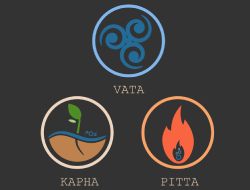
For couples, the Compatibility Consultation (60 minutes, $250 per couple) combines both partners’ birth charts with an Ayurvedic body-type (dosha) assessment and face and palm reading, to look at how you work together and where friction tends to arise.
Astrology and Ayurveda at Yatan
At Yatan, astrology is one part of the YATAN approach (Yoga, Ayurveda, Tantra, Astrology, Nature) that Raman Das has developed since 1979. A Vedic chart and an Ayurvedic constitution describe the same person from two angles, so some clients book a reading alongside an Ayurvedic consultation.
Prices
Vedic astrology reading, chart prepared in advance
Length? 50 minutes
$270 AUD
Compatibility Consultation (couples)
Length? 60 minutes
$250 per couple
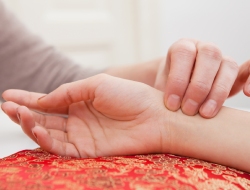
Palm reading (Vedic palmistry)
Length? 50 minutes
$159 AUD
Face reading
Length? 50 minutes
$149 AUD
Tantra-Mantra Therapy
Length? 50 minutes
$149 AUD
Visit the clinic
Yatan Holistic Ayurvedic Centre
Suite 28, 924 Pacific Highway
Gordon NSW 2072
Monday to Friday 9.00am to 5.30pm
Saturday 9.00am to 1.00pm
Phone and video readings are available anywhere in Australia, at Sydney time.
Free 10-minute consultation
Frequently Asked Questions
Q. What is Vedic astrology?
A. Vedic astrology, or Jyotish, is the traditional astrology of India and a sister discipline of Ayurveda and yoga. It uses the sidereal zodiac, aligned to the fixed stars, and reads your birth chart through the twelve signs and houses, the nine grahas including Rahu and Ketu, the 27 nakshatras and the dasha system of planetary periods.
Q. How much is a Vedic astrology reading in Sydney?
A. At Yatan Holistic Ayurvedic Centre in Gordon, a 50-minute Vedic astrology reading is $270, including preparation of your birth chart, navamsa chart and dasha timeline before you arrive. Vedic astrology readings in Sydney generally range from about $80 to $270 depending on length and what is included.
Q. What do I need for a Vedic astrology reading?
A. Your date of birth, your exact time of birth, ideally from your birth certificate, and the town or city where you were born. Send these when you book so your chart can be prepared in advance, and bring the two or three questions that matter most to you.
Q. What if I don’t know my exact birth time?
A. Tell us when you book. The ascendant changes about every two hours, so an uncertain birth time limits some parts of the reading, and your reader will explain which parts of your chart can still be read reliably.
Q. What is the difference between Vedic and Western astrology?
A. Vedic astrology uses the sidereal zodiac aligned to the stars, while Western astrology uses the tropical zodiac aligned to the seasons, so your Vedic signs are often one sign earlier. Vedic astrology also gives more weight to the moon sign, ascendant and nakshatra, and uses dasha periods for timing.
Q. Can Vedic astrology predict the future?
A. Vedic astrology describes tendencies and the timing of periods in your life rather than fixed events. A reading is for reflection and guidance, cannot predict events with certainty, and is not financial, legal, medical or psychological advice.
Q. Do you offer compatibility readings for couples?
A. Yes. The Compatibility Consultation at Yatan is 60 minutes and $250 per couple. It combines both partners’ birth charts with an Ayurvedic body-type assessment and face and palm reading to look at how you work together and where friction tends to arise.
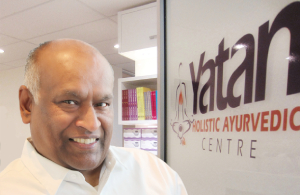
Reviewed and updated by Raman Das Mahatyagi, Principal Ayurvedic Practitioner (ATMS Fellow, 2026-27) | Last updated: 3 November 2026