




















Ayurvedic Dental Care in Sydney
Trusted by 250+ patients in Australia

4.6/5 (Google Reviews)

Holistic & Natural Approach

Personalised Ayurvedic Core

Safe Effective & Side-Effect Free

Sydney’s Trusted Ayurvedic Experts
Natural oral hygiene that doesn’t strip your enamel or disturb the mouth’s pH. From Raman Das Mahatyagi (30+ years’ clinical experience), the Yatan dental approach combines classical Ayurvedic tooth powders, gum massage oils, oil pulling (Gandusha), tongue scraping and personalised diet — addressing the cause of dental problems rather than masking them. In-clinic at Gordon NSW or telehealth Australia-wide.
Quick Answer
Ayurvedic dental care is the natural approach to oral hygiene used in classical Ayurveda for over 3,000 years. It treats teeth and gums as part of the wider body, with the mouth understood as the seat of Kapha dosha and directly linked to digestion. Classical texts call oral diseases Mukha Roga, tooth diseases Danta Roga, and tooth decay Krimi Danta. Daily practice includes oil pulling (Gandusha / Kavala), tongue scraping, herbal tooth powder, gum massage with Ayurvedic oils, and rock salt rinses — all pH-safe and chemical-free. Common products: Yatan Dental Care Kit ($56.80), Ayurvedic Gum Massage Oil ($21.95), Stainless Steel Tongue Scraper ($14.95), and Herbal Tooth Powder ($29.95). Free 10-min consult: 1300 552 260.
Free 10-minute consultation
 1300 552 260
 WhatsApp
  Book online
The Ayurvedic Viewpoint on Dental Problems
As various problems can occur within the physical body and organs, so can teeth become affected and compromised by a host of conditions. Most people are used to using harsh chemical toothpastes and mouthwashes, taking painkillers, or opting for professional dental procedures that are even more painful and invasive. But there are safer and less painful ways to care for and repair your teeth while maintaining their health and strength for years to come.
When it comes to dental conditions, Ayurveda offers an all-natural approach. It also focuses on:
- Prevention of disease
- Care and maintenance
- Repair and strengthening
- Customised treatment
- Treatment that does not disrupt other functions (like pH levels)
- Long-term results
When it comes to dental problems, Ayurveda will also treat the body as a whole, as it is a holistic science. The teeth, for instance, are directly linked to a person’s digestion, as what we eat and how we eat it largely depends on our chewing capacity.
Ayurveda also categorises people into body types, known as doshas, which provide further insight on the root cause of dental problems and how they can best be treated.
Dental Problems and the Doshas
Some of the most common dental problems and symptoms that we deal with at the Yatan Centre are:
- Bleeding gums
- Discoloured or stained teeth
- Gingivitis (gum disease)
- Halitosis (bad breath)
- Loose, weak/wobbly teeth
- Mouth pain and/or infections
- Plaque and bacterial build-up
- Sensitive teeth
- Receding gums
- Toothache
- Tooth cavities
- Tooth decay
- Tooth or gum infections
How Classical Ayurveda Names Oral Conditions
Ayurvedic texts dating back over 2,500 years describe oral and dental conditions in detail. Knowing the Sanskrit names helps connect modern dental complaints to traditional treatments documented in Charaka Samhita, Sushruta Samhita, and Ashtanga Hridaya.
Sanskrit Name – Mukha Roga
Meaning – Diseases of the mouth
Modern Equivalent – Oral diseases (general class)
Sanskrit Name – Danta Roga
Meaning – Diseases of the teeth
Modern Equivalent – Dental diseases
Sanskrit Name – Danta Sharkara
Meaning – Tooth-stone
Modern Equivalent – Tartar / dental calculus
Sanskrit Name – Krimi Danta
Meaning – Worm-tooth (caries explained as micro-organism activity)
Modern Equivalent – Dental caries / tooth decay
Sanskrit Name – Putigandha
Meaning – Putrid smell
Modern Equivalent – Halitosis / bad breath
Sanskrit Name – Sheetada
Meaning – Bleeding/eroding gum
Modern Equivalent – Gum disease / gingivitis
Sanskrit Name – Danta Harsha
Meaning – Tooth shock/sensitivity
Modern Equivalent – Sensitive teeth
Which Dosha Causes Your Dental Problem?
Based on the Ayurvedic viewpoint, certain doshas are more prone to dental problems than others.
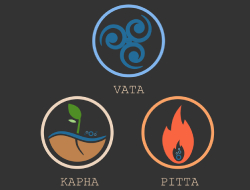
Kapha — Stronger Teeth, Mouth Imbalance
Individuals of the Kapha dosha will generally have stronger teeth and enamel, as the mouth is the seat of the Kapha dosha. Such individuals might, however, be prone to a pH imbalance (resulting in white tongue coating or a yeast overgrowth in the mouth), gum swelling, and hypersalivation. Hormonal and metabolic disorders, which are quite commonplace for Kapha, can also directly affect the mouth and gums.
Pitta — Inflammation, Burning, Decay
Those of the Pitta dosha are more prone to developing tooth problems and gum disease. They will generally face symptoms that signal inflammation (often accompanied by a burning sensation), infection or decay. An imbalanced Pitta dosha will almost always signal a digestive condition and this, in turn, may also result in bad breath and other oral-digestive symptoms.
Vata — Receding Gums, Sensitivity, Nerve Pain
Finally, the Vata dosha is highly prone to dental problems, particularly receding gums, tooth weakness, pain and sensitivity. Vata-related dental problems will usually appear for most seniors and older people, as this dosha increases with age. As Vata directly rules the nervous system, such an individual may suffer from deep nerval pain in the gums, even if they have had their teeth removed.
To have your dosha properly assessed, you will need to consult an Ayurvedic practitioner.
Quick Dosha-Dental Pattern Reference
The same information in scan-friendly form for quick reference:
Kapha
Mouth Seat? Yes — Kapha seat
Strengths: Stronger teeth and enamel
Common Problems: pH imbalance, yeast overgrowth, gum swelling, hypersalivation
Best Approach: Stimulating powders, alkaline rinses, regular tongue scraping
Pitta
Mouth Seat? Secondary
Strengths: Bright teeth
Common Problems: Inflammation, burning, infection, decay, digestion-driven halitosis
Best Approach: Cooling herbs (Yashtimadhu), digestion support
Vata
Mouth Seat? Secondary
Strengths: Often have sharp teeth
Common Problems: Receding gums, sensitivity, weakness, nerve pain, increases with age
Best Approach: Warm oil gum massage, nourishing powders, daily oil pulling
Bleeding gums, sensitive teeth, or bad breath that won’t go away? Talk to Raman Das about a natural approach.
Call Now for Free 10 Minute Consultation
 1300 552 260
 WhatsApp
  Book online
How Can Ayurveda Treat Dental Problems
Ayurveda can help treat dental problems in the following ways:
Gum Problems
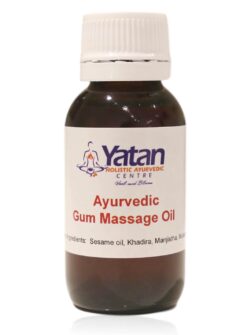
Gums can be repaired with gum massage oil. This all-natural remedy will strip the gums of any toxic residue that has accumulated, stimulating their self-repair and regrowth. Powders, oils, and further treatments may also be prescribed.
Tooth Decay
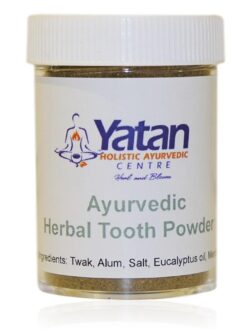
Tooth cavities, staining, and other conditions of the teeth can be treated with herbal powders you can use to brush your teeth with. Oils for oil pulling may also be prescribed, as well as a dietary plan consisting of foods that will not cause further decay.
Tooth Weakness
For teeth that weaken with age, Ayurveda can provide tooth powders, oils, and maintenance tips you can apply to strengthen the enamel, gums, and nerves over time.
Mouth Problems
Oral conditions can range from bad breath to ulcers and infections. Depending on the problem, Ayurveda can provide the appropriate all-natural mouthwash. For any pain or infection, it is often advised to simply gargle a rock salt rinse (a full oral hygiene kit will come in handy). Your digestive system may also be in need of treatment, especially if you are dealing with GERD or halitosis.
Tongue Problems
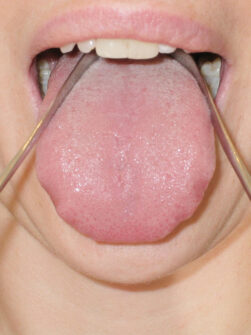
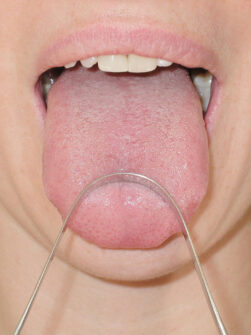
A tongue scraper is the best way to remove bacterial coating from the tongue. Further remedies, such as oils and mouthwashes, may be prescribed. If you have a pH imbalance causing a yeast overgrowth in the mouth (evident via white patches and coating on the tongue), you will receive an entirely different treatment to target that specifically.
It is advised you start caring for your teeth and gums as soon as possible. To receive the appropriate prescription, make sure to consult a qualified Ayurvedic practitioner.
Oil Pulling (Gandusha and Kavala)
Oil pulling is one of the oldest practices in Ayurveda. The Sanskrit names are Gandusha (filling the mouth with oil and holding it without movement) and Kavala (swishing a smaller amount around the mouth). Both are described in detail in classical texts including Charaka Samhita.
What it does
- Removes bacterial biofilm from teeth and gums
- Reduces plaque accumulation
- Strengthens gums and supports loose teeth
- Helps with bad breath
- Reduces inflammation in mild gum disease
- Improves taste perception over time
How to do it
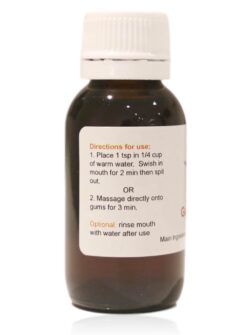
- Use 1 tablespoon of organic sesame or coconut oil, or preferably Yatan Ayurvedic Gum Massage Oil
- Best done first thing in the morning on an empty stomach
- Swish gently for 10–20 minutes (start with 5 minutes)
- Spit out into a bin — never swallow (oil now contains pulled toxins)
- Rinse mouth with warm water
- Brush teeth as usual afterwards
A note on coconut vs sesame oil: Sesame oil is the classical Ayurvedic choice — it has antibacterial properties and is the warmest of oils, suiting Vata. Coconut oil is fine for daily use and works well in summer or for Pitta types. The medicated oils prescribed by an Ayurvedic practitioner may add herbs like Triphala or Yashtimadhu for specific conditions.
The Herbs in Ayurvedic Tooth Powder and Gum Oil
Herbs are prescribed individually based on your dosha and condition. The products listed below contain proprietary formulations — what’s described here is the type of herb traditionally used.
Babool / Acacia (Acacia arabica)
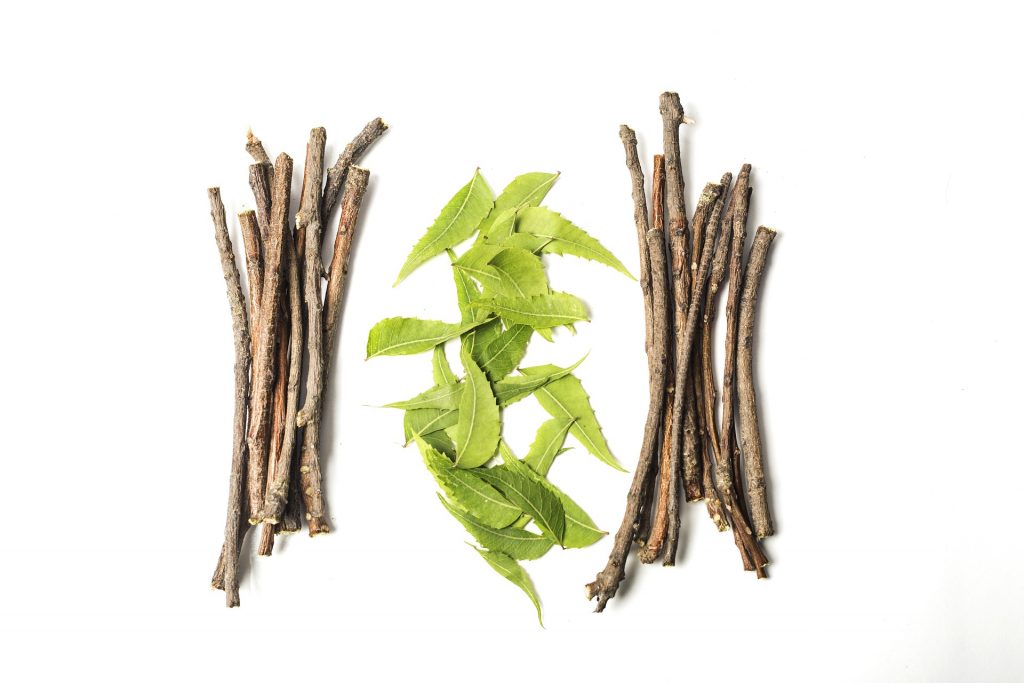
Bark used as the original Ayurvedic ‘toothbrush’ (datun). Astringent properties tighten gum tissue and strengthen tooth-to-gum attachment. Useful for loose teeth and bleeding gums.
Triphala — Three Fruits
Amalaki, Bibhitaki, and Haritaki combined. Used as a rinse for general oral hygiene and as a powder for gentle daily brushing. Mild astringent supports gum health.
Yashtimadhu / Licorice (Glycyrrhiza glabra)
Anti-inflammatory and cooling. Particularly useful for Pitta-type oral conditions — burning gums, mouth ulcers, inflamed mucosa.
Lavanga / Clove (Syzygium aromaticum)
Eugenol (clove oil’s active compound) has long been used for toothache pain relief — Western dentistry uses it too. Antimicrobial and analgesic.
Manjistha (Rubia cordifolia)
Blood-purifier traditionally used for bleeding gums and skin-related Pitta conditions. Supports the body’s overall capacity to keep gum tissue healthy.
Haridra / Turmeric (Curcuma longa)
Anti-inflammatory powerhouse. Used both as a powder and in oil form. Reduces gum inflammation; some studies show it compares favourably to chlorhexidine for gingivitis.
Daily Ayurvedic Oral Care Routine
A complete daily routine takes about 15 minutes in the morning. Skip steps if you’re short on time — even one or two practices is better than chemical toothpaste alone.
Morning:
1
Practice: Drink a cup of warm water on waking
Time: Throughout day
What it does: Supports digestion (Agni) — root of dental health
2
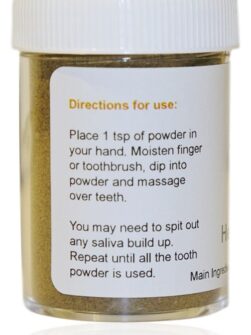
Practice: Brush with Ayurvedic herbal tooth powder
Time: 2 min
What it does: Cleans teeth without stripping enamel, gentle on pH
3
Practice: Tongue scraping with stainless steel scraper
Time: 30 sec
What it does: Removes bacterial coating, improves taste, addresses bad breath
4
Practice: After breakfast, rinse your mouth with water, then do oil pulling (Gandusha) with sesame/coconut oil daily.
Time: 10–20 min
What it does: Pulls toxins, strengthens gums, reduces plaque
Evening:
1
Practice: Brush teeth with Ayurvedic herbal tooth powder
Time: 2 min
What it does: Cleans teeth without stripping enamel, gentle on pH
2
Practice: Gum massage with Ayurvedic gum oil (3x per week)
Time: 2 min
What it does: Strengthens gum tissue, addresses recession
In case of oral infection/gum swelling:
1
Practice: Rinse with warm water + rock salt
Time: 30 sec
What it does: Mild antiseptic, balances mouth pH
Yatan Ayurvedic Dental Products
Yatan Ayurvedic Dental Care Kit
Price: $56.80 AUD
For: Complete starter — fresh breath, whiter teeth, daily oral hygiene
Yatan Ayurvedic Gum Massage Oil 50ml
Price: $21.95 AUD
For: Receding gums, bad breath, oral infections
Yatan Stainless Steel Tongue Scraper
Price: $14.95 AUD
For: Daily tongue cleaning, bacterial coating removal
Yatan Ayurvedic Herbal Tooth Powder
Price: $29.95 AUD
For: Natural teeth whitening, daily brushing





How Does Ayurveda Differ from Western Dentistry?
Western Medicine is often the first form of healing a person with dental problems will pursue. When conditions such as severe pain, irreversible infections and surgical procedures are concerned, Western Medicine should be your first stop.
However, while Western Medicine can be effective, it may often lack in providing safe, all-natural care and long-term results. Acute and severe conditions can be treated almost instantly (and rather invasively), but what about chronic dental problems that persist? What about oral conditions that are caused by a digestive or other problems? And what about daily dental care that is safe enough to not damage the teeth enamel any further? Only Ayurveda is concerned about all the above.
Ayurvedic treatment is not only 100% safe and natural, but it will also never disturb another function or physical system. For example, you will never be prescribed a mouthwash that will harm your tooth enamel or cause overacidity, thus disrupting your mouth’s pH levels (which can lead to decay and infection).
At our Yatan Centre, you can expect to be treated like a unique individual and system. Once your symptoms are examined and your dosha is identified, you will receive a customised, all-natural, non-invasive dental treatment plan that suits your needs and individual constitution.
Side-by-Side Comparison:
Western Dentistry
- First choice for – Severe pain, infections, surgery, structural repair
- Primary approach – Mechanical and surgical (drilling, filling, root canal)
- Toothpaste/rinse – Chemical fluoride, often alters mouth pH
- Gum care – Scaling, root planing, surgical grafts
- Pain management – Painkillers, local anaesthetics
- Digestion link – Not addressed
- Body type matching – Not part of treatment
- Daily routine – Brush + floss + mouthwash
- Side effects risk – Enamel sensitivity, mouth dryness, antibiotic resistance
Ayurvedic Dental Care
- First choice for – Daily care, chronic issues, prevention, gum maintenance
- Primary approach – Herbal, dietary, dosha-balancing
- Toothpaste/rinse – Plant-based powders, pH-neutral
- Gum care – Gum oil massage, herbal powders, tissue regrowth
- Pain management – Clove oil (eugenol), warming oils, herb-based
- Digestion link – Central — teeth health depends on digestion (Agni)
- Body type matching – Customised by dosha
- Daily routine – Tongue scraping + oil pulling + powder + gum massage
- Side effects risk – Minimal when prescribed by qualified practitioner
These approaches work together. Keep your dentist for diagnostics, fillings, extractions, and surgical procedures. Add Ayurvedic care for daily hygiene, gum strengthening, and the digestive-side causes of recurring oral problems.
How Much Does Ayurvedic Dental Care Cost?
Most dental care at Yatan combines product purchase (one-off) with optional consultation if you have specific dental concerns. After the free 10-minute call, Raman Das will recommend what fits your case.
Free 10-Minute Phone/Video Consultation
FREE
Initial Ayurvedic Consultation (60 min)
$139 AUD
Standard Follow-up (30 min)
$81 AUD
Short Follow-up (15 min)
$51 AUD
Yatan Ayurvedic Dental Care Kit (starter bundle)
$56.80
Yatan Ayurvedic Gum Massage Oil 50ml
$21.95
Yatan Stainless Steel Tongue Scraper
$14.95
Yatan Ayurvedic Herbal Tooth Powder
$29.95
Customised herbal preparations (if prescribed)
Varies

Meet Your Practitioner — Raman Das Mahatyagi
Raman Das is the principal Ayurvedic practitioner at Yatan Holistic Ayurvedic Centre in Sydney. 30+ years of clinical experience, private practice since 2000, author of YATAN Yoga and YATAN Yoga Therapy. His approach to dental care focuses on the connection between digestion, dosha, and oral health — addressing the cause of recurring dental problems rather than treating the same symptoms over and over.
Frequently Asked Questions
Q: What is Ayurvedic dental care?
A: Ayurvedic dental care is the natural oral hygiene approach used in classical Ayurveda for over 2,500 years. It treats teeth and gums as part of the whole body — the mouth is the seat of Kapha dosha, and oral health is directly linked to digestion. Classical texts call oral diseases Mukha Roga and tooth diseases Danta Roga. Practice includes oil pulling (Gandusha), tongue scraping, herbal tooth powders, gum massage with medicated oils, and rock salt rinses.
Q: Can Ayurvedic dental care replace going to the dentist?
A: No. Western dentistry remains your first stop for severe pain, infections that need antibiotics, fillings, root canals, extractions, and any surgical procedure. Ayurvedic care complements your dentist — it handles daily hygiene, gum strengthening, prevention, and the digestive causes of recurring dental problems. Best practice is to combine both.
Q: Is oil pulling actually effective?
A: Yes. Modern research has confirmed several traditional claims: oil pulling reduces plaque, decreases Streptococcus mutans (the main cavity-causing bacteria), and improves gum bleeding scores in mild gingivitis. It does not replace brushing or flossing — it adds to them. Use organic sesame or coconut oil, swish for 10-20 minutes, spit out (never swallow), then brush as usual.
Q: Will Ayurvedic tooth powder damage my enamel?
A: Properly formulated Ayurvedic tooth powders are gentler than most commercial toothpastes. The Yatan Ayurvedic Herbal Tooth Powder uses fine, plant-based ingredients that clean without stripping enamel and don’t disturb the mouth’s pH balance. Avoid coarse home-made powders or any product that feels gritty — those can wear enamel over time.
Q: How is bad breath (halitosis) treated in Ayurveda?
A: Halitosis (Putigandha in Sanskrit) is treated by addressing both the mouth and the digestive system. In the mouth: daily tongue scraping, oil pulling, and herbal rinses. In digestion: identifying whether the cause is incomplete digestion (Ama formation), constipation, GERD, or a Pitta imbalance — and treating that root. Most cases of chronic bad breath have a digestive cause.
Q: Can children use Ayurvedic dental products?
A: Yes, with appropriate guidance. The Yatan Dental Care Kit and Herbal Tooth Powder are gentle enough for children old enough to spit out (typically 6+). Oil pulling is harder for young children to master — start with simply swishing a small amount of coconut oil for 1-2 minutes. Always consult a practitioner before starting medicated formulations on children.
Q: What’s the difference between Kapha, Pitta, and Vata dental problems?
A: Kapha is the seat of the mouth — these individuals usually have stronger teeth but are prone to pH imbalance, white tongue coating, gum swelling, and hypersalivation. Pitta types tend toward inflammation, burning, infections, and decay — often linked to digestive issues. Vata types (especially older adults, since Vata increases with age) are prone to receding gums, sensitivity, weakness, and deep nerve pain in the gums. Each pattern gets different herbs and treatments.
Q: Why do teeth and digestion get treated together in Ayurveda?
A: Because chewing is the first step of digestion. The mouth’s job is to break food down so the stomach and intestines can process it. If chewing is compromised (weak teeth, missing teeth, pain), the entire digestive cascade weakens — leading to undigested food, toxin formation (Ama), and recurring health issues. Equally, digestive imbalances (especially Pitta) show up directly in the mouth as bad breath, ulcers, and inflammation. The two systems are inseparable.
Q: Do you offer telehealth consultations for dental concerns?
A: Yes. Yatan offers telehealth consultations Australia-wide. Photographs of the affected area help with assessment. Customised herbal preparations and dental products are posted directly to you. For severe pain, infections, or anything requiring physical dental work, see a dentist first — telehealth Ayurveda complements but doesn’t replace clinical dental examination.
Q: How long until I notice improvements?
A: Some changes happen quickly — fresher breath in 3-7 days of regular oil pulling and tongue scraping, less bleeding when brushing in 2-4 weeks of daily gum oil massage. Deeper improvements (gum tissue regrowth, sensitivity reduction, recurring infections settling) take 2-3 months of consistent practice plus addressing any underlying digestive issues. Severe or long-standing conditions take longer.
Common Problems & Conditions
For deeper information on specific dental conditions:
- Bleeding gums / pyorrhea
- Halitosis / bad breath
- Loose teeth
- Gingivitis
- Tooth decay
- White blotches on teeth
- Discoloured teeth
- Sensitive teeth
Start With a Free 10-Minute Call
If your dental problems keep coming back despite regular dental visits, or you’re looking for a daily routine that doesn’t strip your enamel, book a free 10-minute call. Raman Das will tell you honestly whether Ayurvedic care suits your situation.
 Suite 28, 924 Pacific Highway, Gordon NSW 2072
  Available Australia-wide & internationally
  Mon–Fri: 9:00am–5:30pm
 More Dental Care Resources
- Discoloured (Yellow & Stained) Teeth: Natural Teeth Whitening
- Tooth Decay in Children Treatment
- Oil Pulling — Trend or Treatment
- Gum (Periodontal) Disease and Loose Teeth Treatment
- Gingivitis Symptoms & Treatment
Reviewed by Raman Das Mahatyagi, Principal Ayurvedic Practitioner | Last updated: 14 May 2026