














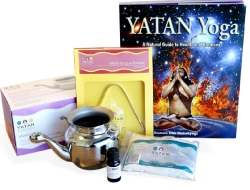




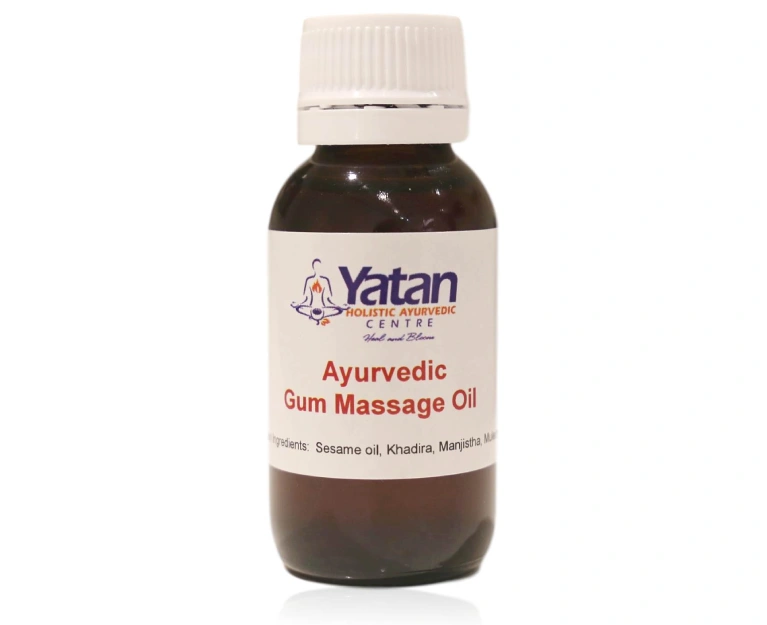
Yatan Ayurvedic Gum Massage Oil, 50ml, for Daily Gum Care and Oil Pulling
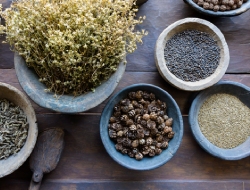
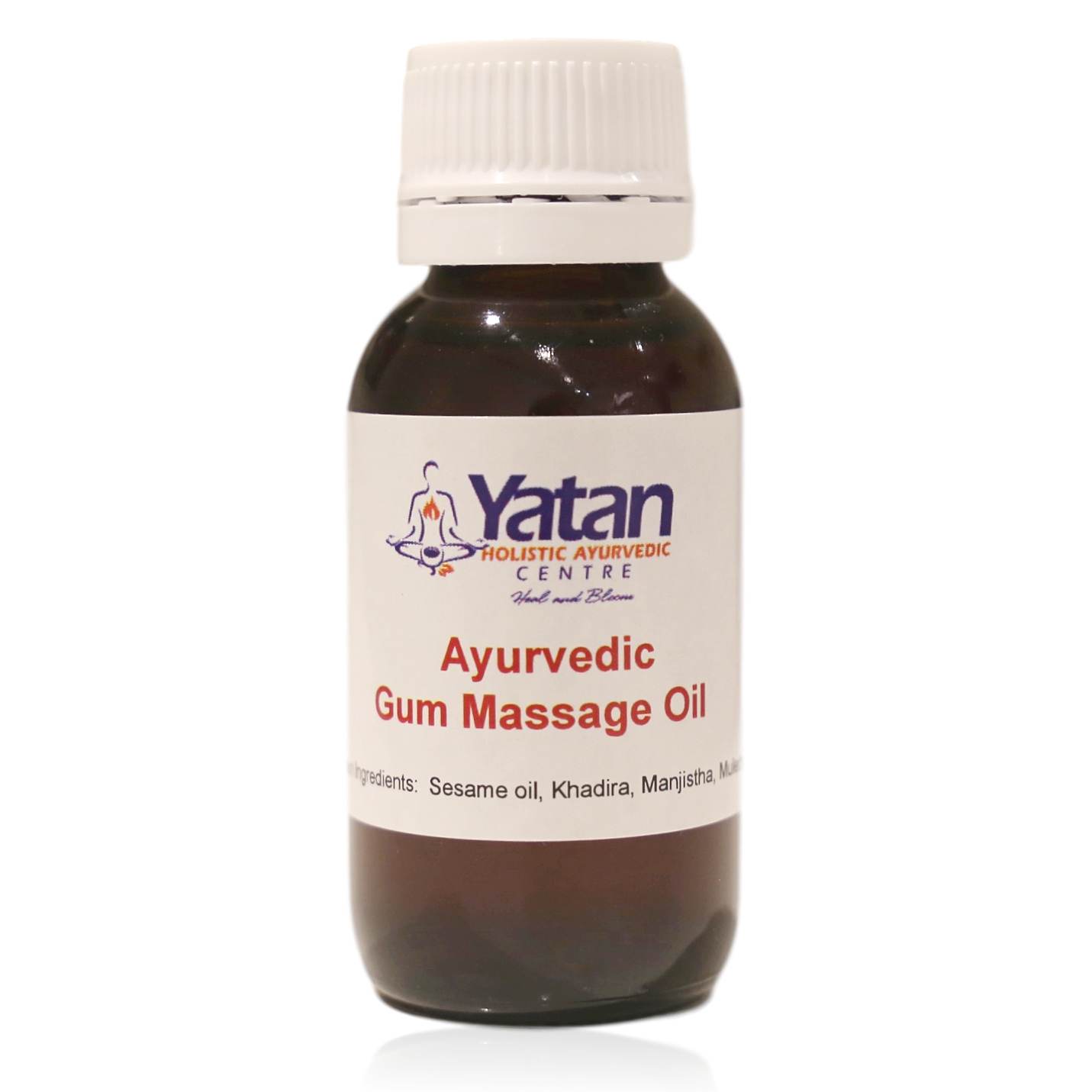
Black sesame oil infused with Khadira, Manjistha, Mulethi and Ela. An authentic Ayurvedic herbal oil made using traditional preparation methods. No alcohol, no fluoride, no foaming agents.
Trusted by 250+ patients in Australia

4.6/5 (Google Reviews)
$21.95In stockSKU: YA-OIL-GUM
- Authentic Ayurvedic herbal oil — made using traditional preparation methods
- 5 ingredients — Black sesame oil and four Ayurvedic herbs. Nothing else
- No alcohol or fluoride — No SLS, no artificial sweetener, no synthetic colour
- Shipped from Sydney — Australian stock, dispatched within 1 business day
Quick answer
Ayurvedic gum massage oil is a herbal oil used for massaging the gum line and for oil pulling, the practice Ayurveda calls Gandusha when the oil is held still in the mouth and Kavala Graha when it is swished. Both belong to Dinacharya, the Ayurvedic daily routine, alongside tooth cleaning and tongue scraping.
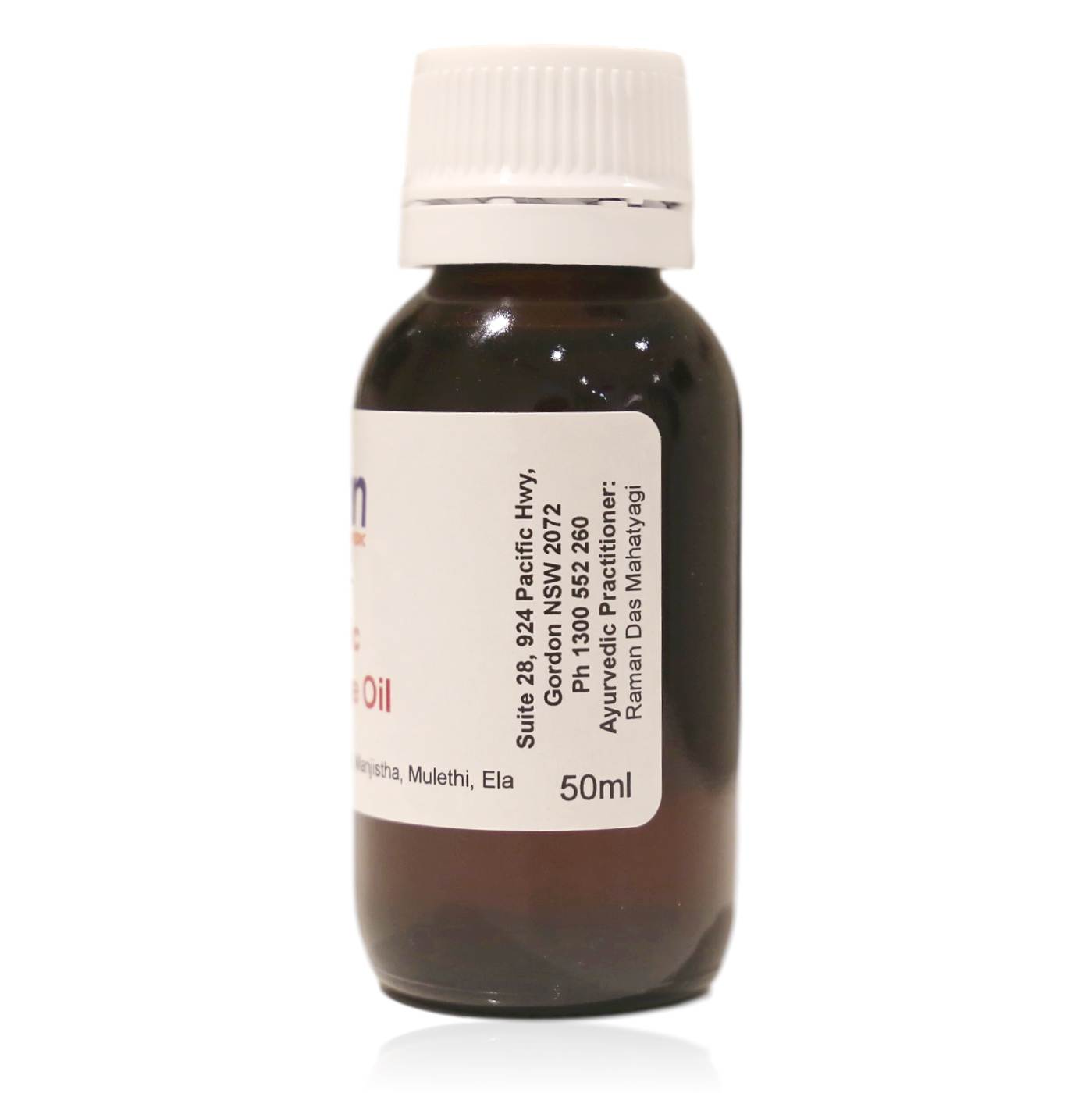
Yatan Ayurvedic Gum Massage Oil is a 50ml bottle of black sesame oil (Sesamum indicum) infused with four classical herbs: Khadira (Acacia catechu), Manjistha (Rubia cordifolia), Mulethi (Glycyrrhiza glabra) and Ela (Elettaria cardamomum). It contains no alcohol, no fluoride and no foaming agents. It costs $21.95 AUD, ships from Sydney.
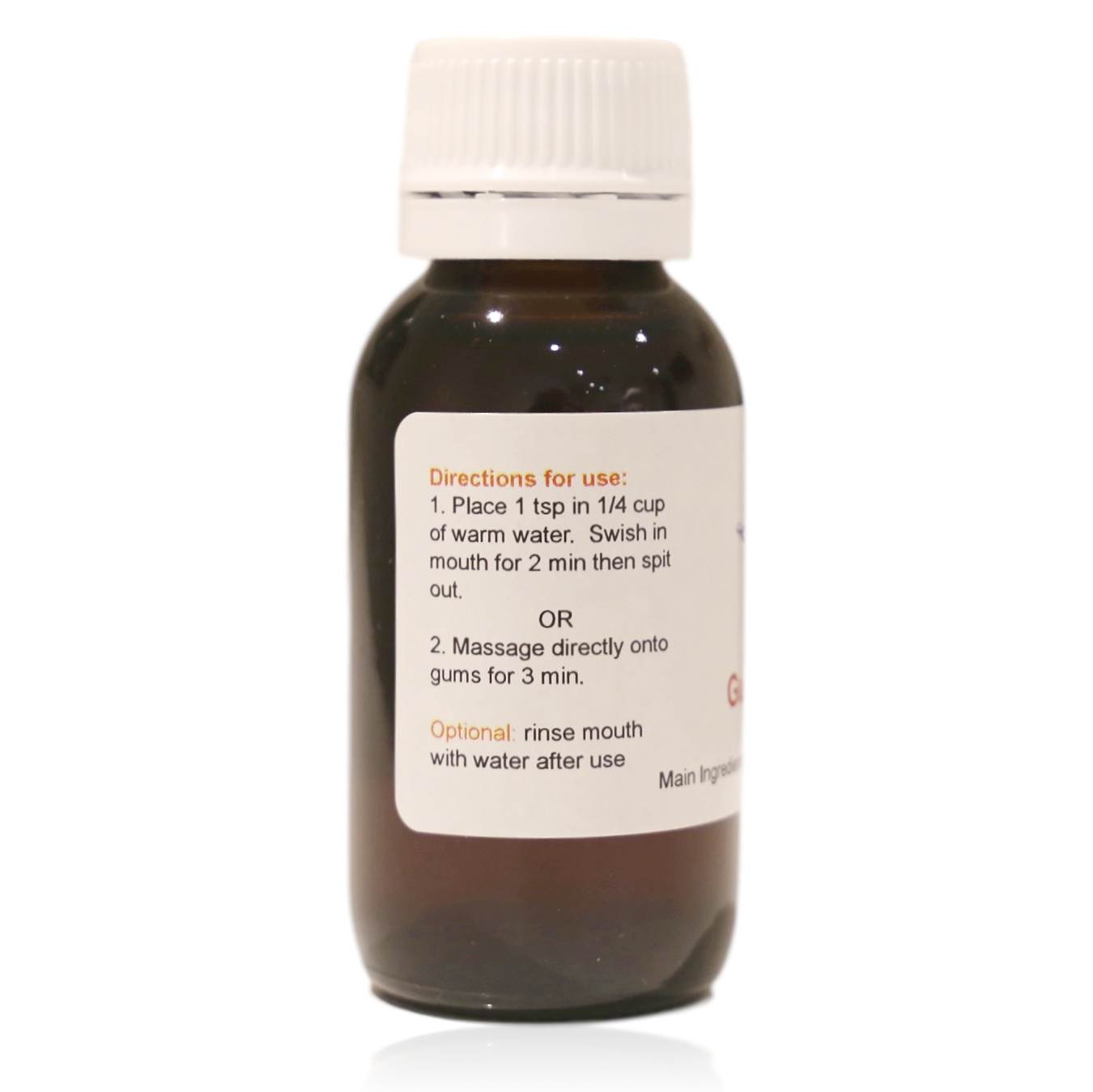
To use: massage a few drops along the gum line for one to two minutes, or swish about a teaspoon around the mouth for five to fifteen minutes, then spit it out. Do not swallow. Contains sesame. It is an oral hygiene product for daily care and does not replace brushing, flossing or dental treatment.
About the product
What Is Ayurvedic Gum Massage Oil?
Your mouth is home to a large and varied population of microflora, living on the tongue, the cheeks, the gums and the teeth. Most of it belongs there and does useful work. The aim of Ayurvedic oral care is not to sterilise the mouth but to keep that population in balance.
Ayurveda approaches this with herbal mouth cleansing oils, used in two ways. A small amount can be massaged along the gum line with a fingertip, or a larger amount can be swished around the mouth for a few minutes and then spat out. The second practice is what is now widely called oil pulling.
Ayurvedic gum oils are prepared by infusing a base oil with specific herbs chosen for oral care, rather than being plain oil straight from the bottle. Oil also behaves differently from a water based rinse: it coats the surfaces of the mouth and stays there for a while rather than washing straight off.
Specifications
- Size
- 50ml
- Base oil
- Black sesame oil (Sesamum indicum)
- Herbs
- Khadira, Manjistha, Mulethi, Ela
- Free from
- Alcohol, fluoride, sodium lauryl sulphate, artificial sweetener, synthetic colour, artificial preservative
- Format
- Herbal infused oil for gum massage and oil pulling
- Shelf life
- 12 months from opening
- Storage
- Cap closed, away from direct sunlight and heat
- Brand
- Yatan
- SKU
- YA-OIL-GUM
- Price
- $21.95 AUD
Ingredients
Five ingredients. Nothing else.
| Criterion | Ingredient | Botanical name | Why it is in the formula |
|---|---|---|---|
| Black sesame oil | Sesamum indicum | The base. Sesame is the classical Ayurvedic oil for oral care and the oil used in most of the published oil pulling research | |
| Khadira | Acacia catechu | The principal herb of classical Ayurvedic oral care. Named across the traditional texts for care of the teeth and gum line | |
| Manjistha | Rubia cordifolia | Traditionally used for the blood and tissues, and included in preparations for the gums | |
| Mulethi | Glycyrrhiza glabra | Liquorice root. Traditionally used where soothing is wanted, and it softens the taste of the formula | |
| Ela | Elettaria cardamomum | Green cardamom. Traditionally used for a fresh mouth, and it carries the aroma of the preparation |
How Ayurveda Understands Oral Problems
According to Ayurveda, ama, the toxic residue of incomplete digestion, is being produced continuously in the body. If lymphatic flow is obstructed, the salivary glands can become congested and the acid alkaline balance of the mouth can shift. That shift is what allows the balance of oral flora to tip.
When it does, the mouth stops feeling clean. The taste buds become less sensitive, and a persistent stale taste can be enough to turn the stomach. Left alone, ama can move to other parts of the head, including the throat and sinuses, and it is also swallowed into the digestive tract.
This is why Ayurveda treats the mouth as the beginning of digestion rather than a separate compartment, and why looking after the gums and the environment around them is part of daily care rather than something you only address when a problem appears.
Bleeding gums, loose teeth, gums pulling away from the teeth, persistent bad breath, pain or swelling all need to be assessed by a dentist. Ayurvedic oral care sits alongside dental care, not in place of it.
The Practice Behind Oil Pulling
"Oil pulling" is a modern name for something Ayurveda described a very long time ago, and the classical texts are more precise about it than the modern term is. They distinguish two practices:
| Sanskrit term | What it means | How you do it |
|---|---|---|
| Gandusha | Filling the mouth and holding | Take enough oil to fill the mouth comfortably and hold it still, without moving it, until the eyes or nose begin to water. Then spit it out |
| Kavala Graha | Swishing | Take a smaller amount, about a teaspoon, and move it actively around the mouth and between the teeth for several minutes. This is what most people mean by oil pulling |
| Dinacharya | The daily routine | The framework both practices belong to, alongside tooth cleaning, tongue scraping and nasal cleansing |
| Danta Dhavana | Tooth cleaning | The brushing step of Dinacharya. Pairs with the Yatan Herbal Tooth Powder |
| Jihwa Nirlekhana | Tongue scraping | Done immediately after oil pulling, before eating or drinking |
| Dantamoola | The gum line | Literally the root of the tooth. The area you are massaging when you use this oil with a fingertip |
The Ayurvedic morning order, if you want to do the whole routine: scrape the tongue, oil pull or massage the gums, rinse, then brush.
How To Use Yatan Ayurvedic Gum Massage Oil
For gum massage
- Wash your hands
- Put two to three drops of oil on a clean fingertip
- Massage gently along the gum line, upper and lower, inside and out, for one to two minutes
- Spit out any excess and rinse with warm water
For oil pulling (Kavala Graha)
- Take about a teaspoon of oil into the mouth
- Swish it slowly around the mouth and pull it between the teeth. Keep it gentle, since jaw fatigue is the usual reason people give up
- Continue for five to fifteen minutes. Start at five minutes and build up
- Spit the oil out. Do not swallow it. Spit into a bin or tissue rather than the sink, since oil solidifies and builds up in plumbing
- Rinse the mouth with warm water
- Scrape the tongue and brush as usual
When
Morning, before eating or drinking, is the traditional time and the one most people find easiest to keep. Daily is ideal. A few times a week still does something.
What The Research Says About Oil Pulling
Oil pulling has been studied, and it is fair to say the evidence is promising rather than settled. We would rather show you what the studies found than imply more than they do.
| Study | What they did | What they found |
|---|---|---|
| Jong et al, 2024 International Journal of Dental Hygiene Systematic review and meta analysis | Pooled 25 randomised controlled trials covering 1,184 participants, all with at least seven days of oil pulling, compared against chlorhexidine, other mouthwashes or standard oral hygiene. Assessed using the Cochrane risk of bias tool and the GRADE framework | Oil pulling significantly improved modified gingival index scores compared with non chlorhexidine mouthwashes. Chlorhexidine remained better at reducing plaque. The reviewers graded the overall certainty of the evidence as very low, and concluded there is a probable benefit for gingival health |
| Innsbruck randomised trial, 2024 Medical University of Innsbruck ClinicalTrials.gov NCT06327841 | 40 participants without advanced periodontal disease, randomised and examiner blinded, pulling with either sesame oil or distilled water for 15 minutes every morning for eight weeks. Plaque and gingival bleeding measured at baseline, four weeks and eight weeks, with microbiological analysis of plaque samples | Sesame oil reduced full mouth plaque significantly more than distilled water at eight weeks. No significant change was found in the gingival index or in the microbiological analysis. The authors noted a study bias could not be ruled out and called for higher quality trials, concluding oil pulling may be recommended as an adjunct to mechanical cleaning |
How This Differs From A Mouthwash
A water based rinse washes over the mouth and drains away in seconds. Oil is thicker, it coats the surfaces it touches, and it stays there for the minutes you are swishing it. That is the practical difference and it is why the technique takes longer.
This oil contains no alcohol, no fluoride and no foaming agents. The Ayurvedic aim is to keep the oral flora in balance rather than to sterilise the mouth, which is a different goal from the one most commercial rinses are designed for.
It is also prepared rather than plain. The base oil is infused with Khadira, Manjistha, Mulethi and Ela, so it is not the same thing as taking cooking oil from the cupboard.
Goes well with
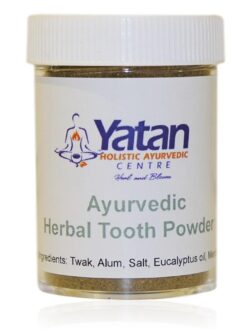
Ayurvedic Herbal Tooth Powder for Natural Teeth Whitening
What is the YATAN Herbal Tooth Powder? YATAN Ayurvedic herbal tooth powder is free from chemicals and foaming agents for Natural Teeth Whitening. The unique blend of herbs…

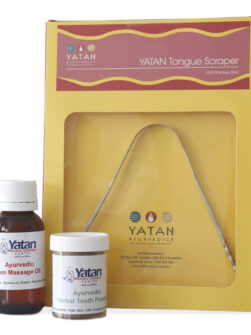
Tongue Scraper | Stainless Steel
What is Tongue Scraper? The tongue scraper (also called Tongue Cleaner or Tongue Brush) is a device designed to remove the build-up of bacteria, food waste, fungi and…
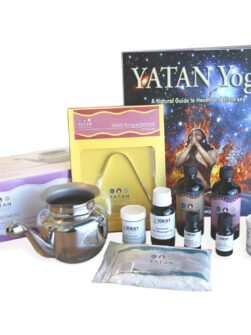
Yatan Dental Care Kit - for Fresh Breath,Teeth Whitening and Good Oral Hygiene
Do you suffer with: bad breath teeth stains from coffee, tea and other foods plaque build up and a coating on your tongue? Then the Yatan Dental Care…
Customer reviews
What owners say
Only logged in customers who have purchased this product may leave a review.
Write a review — only verified purchasers can leave a review, once signed in.
Sign in to reviewFrequently Asked Questions
What is Ayurvedic gum massage oil?
It is a herbal oil made for massaging into the gums and for oil pulling. The Yatan oil uses a black sesame oil base infused with four classical Ayurvedic herbs: Khadira, Manjistha, Mulethi and Ela. It is used as part of a daily oral hygiene routine alongside brushing and tongue scraping, not as a replacement for them. The bottle is 50ml and costs $21.95.
What is oil pulling, and what is Gandusha?
Oil pulling is the modern name for a practice Ayurveda has described for centuries. Classical texts distinguish two forms. Gandusha means filling the mouth with oil and holding it still. Kavala, sometimes called Kavala Graha, means taking a smaller amount and swishing it around. Both sit within Dinacharya, the Ayurvedic daily routine, alongside tooth cleaning and tongue scraping.
How do I use it?
Two ways, and most people do both. For gum massage, put a few drops on a clean fingertip and massage gently along the gum line, upper and lower, for one to two minutes. For oil pulling, take about a teaspoon, swish it slowly around the mouth and between the teeth for five to fifteen minutes, then spit it out. Rinse with warm water afterwards. Best done in the morning before eating and before brushing.
How long does a 50ml bottle last?
That depends on whether you use it for gum massage, for oil pulling, or both, and how often. Gum massage uses only a few drops, so a bottle lasts considerably longer than if you are oil pulling with a teaspoon each morning. Store the bottle with the cap closed, away from direct sunlight and heat.
Can I swallow the oil?
No. Do not swallow it. Once you have finished swishing or massaging, spit the oil out. The point of the practice is to remove what the oil has picked up, so swallowing it defeats the purpose.
Does it contain alcohol, fluoride or artificial foaming agents?
No. The ingredients are black sesame oil (Sesamum indicum) infused with Khadira (Acacia catechu), Manjistha (Rubia cordifolia), Mulethi (Glycyrrhiza glabra) and Ela (Elettaria cardamomum). There is no alcohol, no fluoride, no sodium lauryl sulphate, no artificial sweetener and no synthetic colour.
Is it safe if I have a sesame or nut allergy?
The base is black sesame oil, so do not use this product if you have a sesame allergy. Stop using it and seek advice if you notice any irritation, swelling or unusual reaction.
How long before I notice a difference?
People differ. Some notice their mouth feels cleaner and fresher within the first week, others take longer. Oil pulling is a habit rather than a one off treatment, so it works best when it becomes part of your morning routine rather than something you do occasionally.
Can I use it alongside my normal toothpaste and mouthwash?
Yes. This oil is designed to sit alongside brushing, flossing and your usual routine, not to replace any of them. Many people oil pull first thing in the morning and then brush as normal afterwards. It works well with the Yatan Ayurvedic Herbal Tooth Powder and a tongue scraper.
Is it suitable for children?
Oil pulling is not suitable for young children, because it requires holding oil in the mouth for several minutes without swallowing. Older children who can reliably spit rather than swallow may use gum massage under adult supervision. Ask your dentist if you are unsure.
Can I use it during pregnancy or while breastfeeding?
The ingredients are food grade herbs and sesame oil, and the product is used in the mouth and spat out rather than swallowed. As with any product, if you are pregnant or breastfeeding, check with your doctor, midwife or dentist before starting something new.
Does oil pulling actually work? What does the research say?
There is a reasonable body of research and it is honest to say the evidence is mixed. A 2024 systematic review and meta analysis in the International Journal of Dental Hygiene pooled 25 randomised trials covering 1,184 participants, and found oil pulling improved gingival index scores compared with non chlorhexidine mouthwashes, while chlorhexidine remained better at reducing plaque. The reviewers graded the overall certainty of the evidence as very low. A 2024 randomised controlled trial at the Medical University of Innsbruck compared sesame oil pulling with distilled water over eight weeks and found greater plaque reduction with sesame oil, though the authors noted a study bias could not be ruled out and called for higher quality trials. Taken together the research supports oil pulling as a useful addition to brushing and flossing, not a replacement for them.
Can I use it if I have crowns, veneers, implants or braces?
Generally yes, since the oil is not abrasive and contains no bleaching agents. If you have recently had dental work, orthodontic appliances or any ongoing dental treatment, check with your dentist first so they can advise on your specific situation.
Should I spit the oil into the sink?
Spit it into a bin or a tissue rather than the sink where you can. Oil solidifies as it cools and can build up in household plumbing over time. Rinse your mouth with warm water afterwards.
Do I still need to see a dentist?
Yes. This is an oral hygiene product for daily care and it is not a substitute for dental treatment. Bleeding gums, loose teeth, persistent bad breath, pain, swelling or gums pulling away from the teeth all need assessment by a dentist. Keep your regular check ups.
Yatan Ayurvedic Gum Massage Oil is an oral hygiene product for daily care. It is not intended to diagnose, treat, cure or prevent any disease, and it does not replace brushing, flossing or regular dental examination. If you have bleeding gums, loose teeth, pain, swelling, persistent bad breath or any change in your mouth you are unsure about, see a dentist. Contains sesame. Do not swallow. Keep out of reach of young children.
Related products
Reviews
There are no reviews yet.