








Ayurvedic Treatment for Sports Injury in Sydney
Trusted by 250+ patients in Australia

4.6/5 (Google Reviews)

Holistic & Natural Approach

Personalised Ayurvedic Care

Supporting Long-Term Wellbeing

Experienced Ayurvedic Care in Sydney
Ayurvedic care may be used as a complementary approach during recovery from sports and musculoskeletal injuries, particularly after appropriate medical assessment and acute care. At Yatan, care is personalised according to the type of injury, stage of recovery, your Ayurvedic constitution and overall health. Depending on individual needs, this may include Ayurvedic herbal preparations, traditional oils such as Mahanarayan Oil, dietary guidance, yoga therapy and pranayama. In-clinic at Gordon, NSW, or telehealth Australia-wide.
Quick Answer
Sports injuries include sprains, strains, ligament and tendon injuries, fractures, dislocations and overuse injuries. An appropriate medical professional should assess acute or significant injuries first.
In Ayurveda, traumatic injuries are traditionally discussed within concepts including Abhighata (external trauma), Bhagna (fracture) and Sandhi Moksha (joint dislocation). Ayurvedic care can be incorporated alongside appropriate medical or rehabilitation care, with the approach personalised to the injury, stage of recovery, and individual dosha pattern using Mahanarayan oil, customised Ayurvedic formulations, marma point therapy, rehabilitation yoga, and pranayama. For acute injuries, see your GP or sports medicine doctor FIRST. Ayurveda then supports long-term healing.
Free 10-minute consultation
 1300 552 260
 WhatsApp
  Book online
What Is the Ayurvedic Viewpoint on Sports Injury?
Sports injuries may occur through sudden accidents or trauma, repetitive strain, or overuse. Factors such as previous injuries, physical conditioning, biomechanics and the health of muscles, joints and connective tissues can also influence injury risk.
Accidental or Traumatic Injury
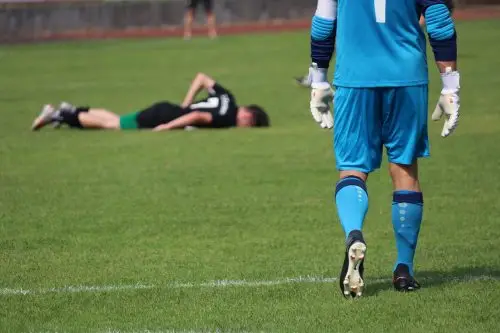
Some injuries occur suddenly through a fall, collision, awkward movement or other external trauma. Depending on the severity, appropriate medical assessment may be required to identify fractures, dislocations, ligament damage or other injuries.
Underlying Factors
Repeated or recurrent injuries may warrant further investigation of factors such as muscle strength, joint stability, flexibility, training load and previous injury. Assess these appropriately where necessary.
From an Ayurvedic perspective, the practitioner may additionally consider the individual’s constitution (Prakriti), current dosha balance (Vikriti), digestion (Agni), lifestyle and overall physical condition when developing a personalised supportive-care plan.
Dosha and Sports Injury
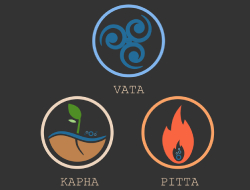
Ayurveda may interpret musculoskeletal symptoms according to the qualities associated with Vata, Pitta and Kapha. These traditional patterns are not medical classifications of sports injuries, but may form part of an Ayurvedic assessment.
Kapha Dosha
Kapha is traditionally associated with structure, stability, heaviness and lubrication. A Kapha-dominant presentation may be associated with heaviness, swelling, stiffness or sluggishness.
Pitta Dosha
Pitta is associated with heat and intensity. Where Pitta qualities are prominent, the affected area may be described in Ayurvedic terms as having greater heat, redness or a burning quality.
Vata Dosha
Vata is traditionally associated with movement, dryness and the bones and joints. A Vata-dominant presentation may therefore be associated in Ayurveda with stiffness, restricted movement, cracking or variable discomfort.
More than one dosha may be involved, and the Ayurvedic pattern can also change during different stages of recovery. Assessment therefore considers the individual rather than assuming that everyone with the same injury requires the same approach.
When to Seek Medical Attention
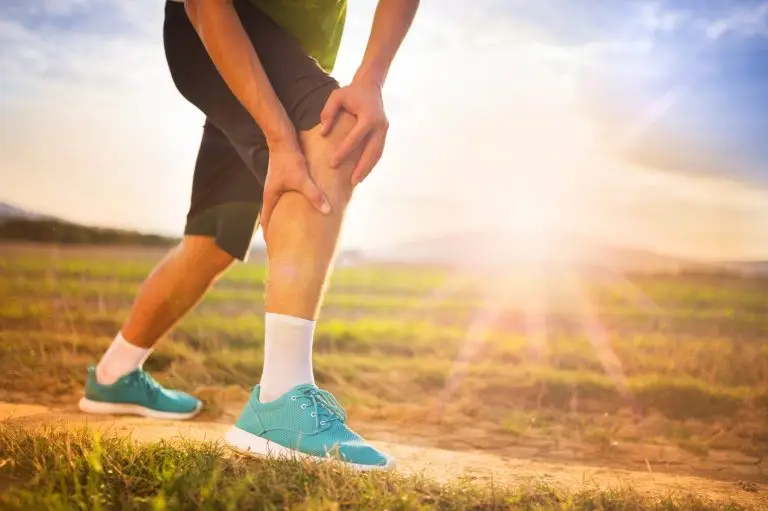
Many minor sports injuries improve with appropriate rest and self-care, but significant or persistent injuries should be properly assessed.
Seek prompt medical attention if you experience severe pain, significant swelling or bruising, inability to bear weight or use the affected limb, numbness or weakness, an obvious deformity, suspected fracture or dislocation, or symptoms that are severe, worsening or not improving as expected.
Once the injury has been appropriately assessed, Ayurvedic care may be considered as part of a broader recovery plan alongside medical treatment, physiotherapy or other rehabilitation where required.
Sports Injuries in Late Winter
Late winter can be a challenging time for people involved in winter sports. Cooler temperatures may make muscles and joints feel stiffer, while accumulated training and competition over the season can contribute to fatigue. Taking adequate time to warm up and paying attention to persistent aches or restricted movement can therefore be particularly important.
From an Ayurvedic perspective, the cold, dry and mobile qualities associated with Vata become more prominent during the cooler months. Vata is traditionally associated with movement and with the bones and joints, so Ayurvedic seasonal care during this time often emphasises warmth, regularity and nourishing practices.
Before training or competition, allow enough time for a progressive warm-up and keep the body warm between periods of activity. You may also incorporate traditional warm oil massage with Mahanarayan Oil into a general post-exercise self-care routine for tired or stiff muscles and joints, where massage is appropriate.
If you are returning to running, sport or regular training after a period of reduced activity, increase your training gradually rather than returning immediately to your previous intensity. Persistent pain, swelling or an injury that is not improving should be appropriately assessed rather than simply trained through.
Sports Injuries Where Ayurvedic Support May Be Considered
Yatan Ayurveda supports recovery from a wide range of sports injuries — primarily in the long-term healing phase after initial medical care:
Joint Injuries
- Knee injuries (ACL/MCL tears, meniscus damage)
- Shoulder injuries (rotator cuff tears, dislocation)
- Ankle sprains (ligament strain or tear)
- Wrist and hand injuries
- Hip injuries and labral tears
Muscle & Tendon Injuries
- Hamstring strain
- Calf strain (gastrocnemius/soleus)
- Quadriceps strain
- Tennis elbow / Golfer’s elbow
- Achilles tendinitis
- Plantar fasciitis
Overuse & Chronic Conditions
- IT band syndrome
- Shin splints (medial tibial stress syndrome)
- Stress fractures (post-acute care)
- Cumulative joint wear
- Chronic post-surgical recovery (knee, shoulder, hip replacements)
Experiencing ongoing symptoms after a sports injury?
Find out how personalised Ayurvedic care may be incorporated into your broader recovery and wellbeing plan.
Call Now for Free 10 Minute Consultation
 1300 552 260
 WhatsApp
  Book online
Ayurveda Alongside Conventional Sports Injury Care
Ayurveda and conventional healthcare have different roles and should not be viewed as alternatives to one another.
Medical assessment is particularly important after significant or acute injury, when examination, diagnostic imaging, pain management, immobilisation, surgery, or physiotherapy may be required.
Ayurvedic care may be considered as a complementary approach during recovery or rehabilitation.
At Yatan, we encourage clients to continue appropriate medical and rehabilitation care and to provide details of their diagnosis, medications, imaging and other relevant treatment when attending an Ayurvedic consultation.
What May Ayurvedic Care for Sports Injury Recovery Involve?
At Yatan, Ayurvedic care is personalised rather than based solely on the type of injury. Your consultation may consider the circumstances of the injury, current symptoms, stage of recovery, general health, digestion, lifestyle and Ayurvedic constitution.
If you have medical reports, imaging results such as X-rays or MRI scans, or details of current medications and rehabilitation, we encourage you to bring them to your consultation.
Depending on your individual assessment, Ayurvedic care may include:
- Individually selected Ayurvedic herbal preparations
- Traditional herbal oils or topical preparations
- Dietary and lifestyle recommendations
- Gentle yoga therapy appropriate to your stage of recovery
- Pranayama and relaxation practices
These approaches are intended to complement, rather than replace, appropriate medical treatment or physiotherapy when required.
Ayurvedic Herbs Traditionally Used in Musculoskeletal Care
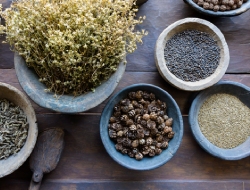
Ayurveda traditionally uses a range of herbs and herbal formulations for musculoskeletal care. Some examples are given below. The choice of herbs depends on the individual, the nature and stage of the injury, dosha pattern, general health and any medications being taken.
These herbs are not appropriate for every person or every injury. At Yatan, custom herbal preparations are prepared following consultation rather than recommended as a standard treatment for a particular sports injury.
Ashwagandha (Withania somnifera) — Recovery Adaptogen
The premier rejuvenative (rasayana) for muscle recovery, strength building, and recovery from fatigue.
Shallaki (Boswellia serrata) — Joint Anti-Inflammatory
Frankincense — widely used in Ayurveda for improving joint mobility and flexibility. Used internally and in topical preparations. Particularly valuable for ACL/meniscus recovery and chronic joint inflammation.
Guggulu (Commiphora mukul) — Tissue Repair Resin
Used in classical formulations like Yogaraj Guggulu and Kaishore Guggulu — supports tissue repair, reduces inflammation, and clears ama (metabolic waste) from joints.
Haridra (Curcuma longa) — Turmeric
Powerful anti-inflammatory. Used internally with warm milk (turmeric milk) and externally in herbal pastes (lepa).
Nirgundi (Vitex negundo) — Muscle & Joint Pain Herb
A classical Ayurvedic herb for joint and muscle pain. Used topically in oils and internally as a decoction.
Free 10-minute consultation
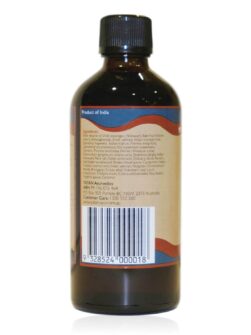
Mahanarayan Massage Oil for Ayurvedic Massage
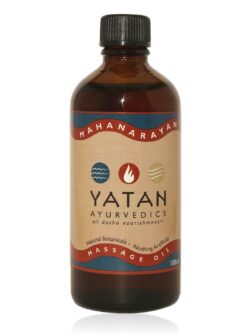
Mahanarayan Oil is a traditional Ayurvedic herbal massage oil commonly associated with Vata and musculoskeletal care. Its warming, nourishing qualities make it particularly suitable for massaging tired or stiff muscles and joints.
It may be incorporated into an Ayurvedic massage or self-care routine to:
- Massage tired or overworked muscles
- Support comfort and flexibility
- Provide warming, nourishing massage
- Complement an Ayurvedic musculoskeletal-care routine
Do not apply Mahanarayan Oil to an acute injury where massage has been medically advised against, or to broken or irritated skin. If you have a significant or recently sustained injury, seek appropriate professional advice before massaging the affected area.
How to Use:
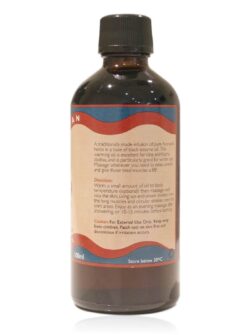
- Warm the oil slightly (do not boil)
- Apply liberally to the affected area or the full body
- Massage gently for 5-15 minutes
- Allow 20-30 minutes for absorption, then take a warm shower
- Apply daily during active recovery phases
Yoga Therapy During Sports Injury Recovery
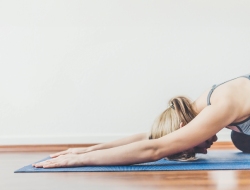
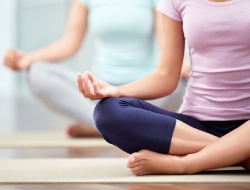
Yoga therapy may be incorporated into an Ayurvedic approach to sports injury recovery where movement and exercise are appropriate. Rather than focusing only on flexibility, practices can be individually adapted to support mobility, strength, balance, body awareness and a gradual return to normal activity.
The type and intensity of yoga should always reflect the nature and stage of the injury. Following a significant injury, fracture, surgery or joint reconstruction, yoga should only be introduced in accordance with advice or restrictions provided by your doctor, physiotherapist or other treating health professional.
Principles of Rehabilitation Yoga
- Begin with an appropriate warm-up before stretching or strengthening exercises
- Introduce movement gradually according to the stage of recovery
- Use suitable strengthening practices to support stability and functional movement
- Work progressively on flexibility and range of motion without forcing the injured area
- Avoid movements that cause significant pain or aggravate symptoms
- Focus on controlled movement, alignment and body awareness
- Practise regularly, while allowing appropriate time for rest and recovery
Pranayama and Relaxation
Pranayama (yogic breathing) and relaxation practices may also be incorporated into yoga therapy to encourage calm, breathing awareness and relaxation, particularly when injury or reduced activity is contributing to stress.
Practices may include:
- Ujjayi (Ocean Breath) — a slow, controlled breathing practice traditionally used to encourage focus and calm
- Nadi Shodhana (Alternate Nostril Breathing) — traditionally practised to promote a sense of balance and relaxation
- Diaphragmatic Breathing — gentle abdominal breathing that can encourage relaxation and greater awareness of the breath
The choice of yoga and pranayama practices should be personalised according to the individual, the injury and the stage of recovery.
YATAN Yoga Therapy
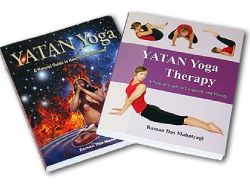
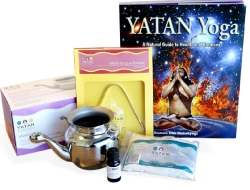
The YATAN Yoga Therapy book provides detailed information on therapeutic yoga principles and practices and is available from Yatan for $69.95 AUD.
How Long Does Sports Injury Recovery Take?
Recovery time varies considerably according to the type and severity of the injury, the tissues involved, age and general health, whether surgery was required, previous injuries and the rehabilitation program being followed.
For this reason, Yatan does not provide a standard Ayurvedic recovery timeline. Where Ayurvedic care is used, recommendations are personalised and may be adjusted as your recovery progresses.
For significant injuries, return to sport or strenuous activity should be guided by the appropriate medical or rehabilitation professional.
How Much Does Ayurvedic Sports Injury Treatment Cost?
Cost depends on injury severity and treatment duration. After your free 10-minute consultation, Raman Das can discuss which Ayurvedic services or preparations may be appropriate for your individual needs.
Free 10-Minute Phone/Video Consultation
FREE
Initial Ayurvedic Consultation (60 min)
$139 AUD
Standard Follow-up (30 min)
$81 AUD
Short Follow-up (15 min)
$51 AUD
Mahanarayan Massage Oil 100ml
$37.95 AUD
YATAN Yoga Therapy book
$69.95 AUD
YATAN Yoga Book Bundle
$130.00 AUD
Customised herbal formulations
Varies by prescription
Prices current as at August 2026.
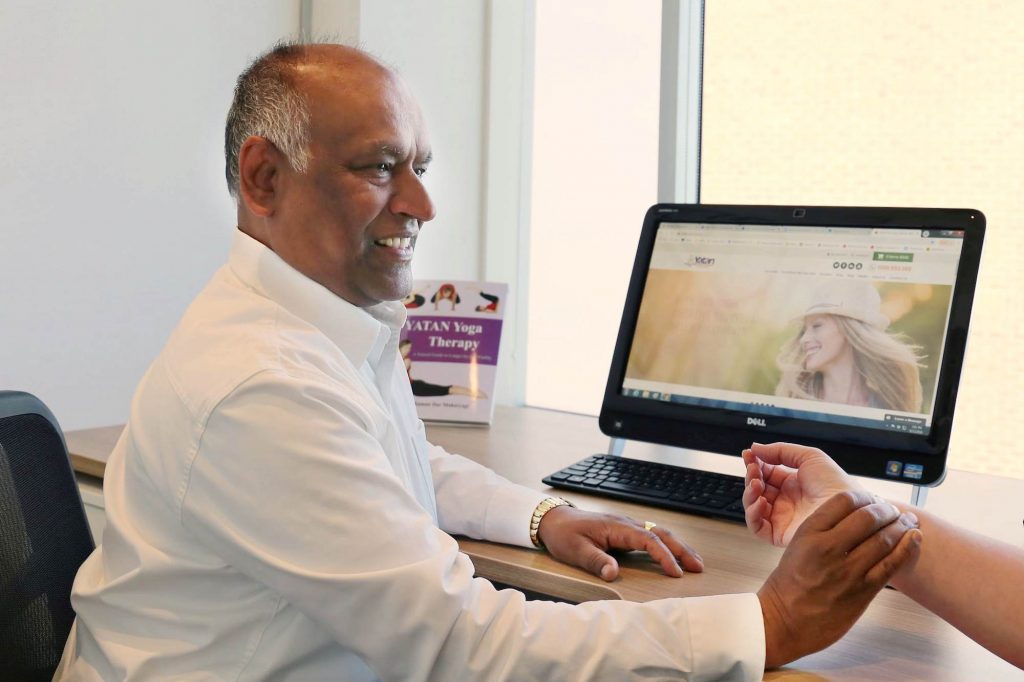
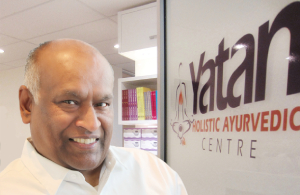
Meet Your Practitioner — Raman Das Mahatyagi
Raman Das Mahatyagi is the principal Ayurvedic practitioner at Yatan Holistic Ayurvedic Centre and has more than 30 years of professional experience, including private practice in Sydney since 2000. He is the author of YATAN Yoga and YATAN Yoga Therapy.
His approach to musculoskeletal and sports-injury support combines traditional Ayurvedic assessment with individually selected herbs and oils, dietary and lifestyle guidance, and yoga therapy where appropriate.
Frequently Asked Questions
Q: What is a sports injury from an Ayurvedic perspective?
A: In Ayurveda, sports injuries are classified under Abhighataja Vrana (traumatic wound) and include conditions like Sandhi Mocha (joint dislocation) and Bhagna (fracture). Sports injuries are understood through two lenses: external trauma (Abhighata) and underlying constitutional weakness (the dosha pattern that made the body more susceptible). Depending on individual needs, Ayurvedic care may include traditional herbal preparations and oils, dietary and lifestyle guidance, yoga therapy and pranayama – alongside conventional medicine.
Q: Should I use Ayurveda or Western medicine for a sports injury?
A: Both. For an acute sports injury with significant pain, swelling or suspected fracture, see a medical professional first – Western medicine is excellent for diagnosis (X-ray, MRI), immediate stabilisation, and acute pain control. We highly advise using Western allopathic medicine first when the condition is acute, then incorporating Ayurvedic support for sustained recovery.
Q: Why are muscle and joint injuries more common in cold weather?
A: Cold tissue is stiff tissue. In low temperatures, muscles, tendons, and ligaments lose elasticity, blood flow to the limbs decreases, and reaction times slow slightly, so the same movement that is safe in warm conditions can strain or tear cold tissue. That is why hamstring and calf injuries spike in winter sports. In Ayurvedic terms, winter aggravates Vata, the dosha governing joints, ligaments and movement control, making these tissues drier and more brittle. Prevention: warm up thoroughly and gradually before every session, stay warm between efforts, do regular warm oil massage (Mahanarayan oil suits most people) to keep tissues supple, and address small niggles early instead of playing through them. If an injury does happen, have a medical professional assess it first, then use Ayurvedic care to support the recovery phase.
Q: How do the doshas relate to sports injuries?
A: According to Ayurveda, Vata individuals are most prone to musculoskeletal injury because bones and joints are a site of Vata — they often develop weak ligaments and ‘bone-deep’ pain. Pitta types are quite prone to muscular injuries with sharp, burning pain — and joint problems often link to their digestive fire (agni). Kapha types are most tolerant to physical trauma due to abundant shleshaka kapha (cushion-like collagen around joints), but still need treatment as they are prone to slow healing and infection.
Q: What Ayurvedic oil can be used for sports massage?
A: Mahanarayan Oil ($37.95) is Ayurveda’s premier oil for sports massage and Vata-related musculoskeletal conditions. Its warming and nourishing qualities make it particularly suitable for massage of tired or stiff muscles and joints. You can apply it locally to the affected area or use it for a full-body massage.
Q: Does Ayurvedic care replace pain-relief medication?
A: No. Ayurvedic care should not be regarded as a replacement for pain-relief medication that is medically necessary or has been prescribed by your doctor. At Yatan, Ayurvedic care may include individually selected herbal preparations, traditional oils, dietary and lifestyle recommendations, yoga therapy and pranayama according to your individual needs. If you require medication for acute or ongoing pain, discuss this with your GP or other treating health professional. Do not stop or alter prescribed medication without appropriate medical advice.
Q: How long does Ayurvedic care for a sports injury take?
A: There is no standard Ayurvedic treatment or recovery time for a sports injury. Recovery can vary considerably according to the type and severity of the injury, the tissues involved, your age and general health, whether surgery was required, previous injuries and the rehabilitation program being followed. Where Ayurvedic care is incorporated, recommendations are personalised and may change as recovery progresses. For significant injuries, decisions about returning to sport, running or strenuous exercise should be guided by the appropriate medical or rehabilitation professional.
Q: What type of yoga can be used during sports injury recovery?
A: Gentle, therapeutic yoga adapted to the type of injury, stage of recovery and the individual’s mobility and physical capacity. Depending on the circumstances, practices may focus on gentle movement, flexibility, balance, body awareness and progressive strengthening. The Yatan Yoga Therapy book ($69.95) covers rehabilitation sequences. Specific principles: warm up before stretching, gradually improve range of motion, build muscle around the joint for stabilisation, and use pranayama (breath work) to increase oxygen and circulation to healing tissues. Avoid forced stretches, deep backbends, or high-impact movements during recovery. Always work with an experienced yoga therapist.
Q: Can Ayurveda be used for an old sports injury?
A: People experiencing ongoing stiffness, discomfort, or restricted movement after a previous sports injury may consider Ayurvedic care, provided persistent or unexplained symptoms have been appropriately assessed. An Ayurvedic consultation considers the nature and history of the injury, along with your current symptoms, dosha pattern, general health, and lifestyle. Depending on individual needs, care may include traditional Ayurvedic oils and herbal preparations, dietary and lifestyle guidance, yoga therapy and pranayama. Ayurvedic care can also be used alongside physiotherapy, exercise rehabilitation or other appropriate healthcare.
Q: Do you offer telehealth consultations for sports injury support?
A: Yes. Yatan Holistic Ayurvedic Centre offers telehealth consultations throughout Australia and internationally. During a video consultation, Raman Das Mahatyagi can discuss your injury history, current symptoms, general health, Ayurvedic constitution and any medical or rehabilitation care you are receiving. Where relevant, information from medical assessments or imaging can also help provide context for the consultation. Following your Ayurvedic assessment, individually selected herbal preparations or other Yatan products can be sent to you where shipping and applicable regulations permit. For significant sports injuries, telehealth Ayurvedic consultations do not replace hands-on medical or physiotherapy assessment where this is required.
Book your free 10-minute consultation
Find out whether personalised Ayurvedic care may be suitable as part of your sports injury recovery and wellbeing plan.
Speak with Raman Das Mahatyagi about your individual needs, current treatment and the Ayurvedic approaches that may be considered alongside appropriate medical or rehabilitation care.
 Suite 28, 924 Pacific Highway, Gordon NSW 2072
  Available Australia-wide & internationally
  Mon–Fri: 9:00am–5:30pm
 Reviewed and updated by Raman Das Mahatyagi, Principal Ayurvedic Practitioner (ATMS Fellow, 2026-27) | Last updated: 8 August 2026