













Ayurvedic Treatment for Children & Childhood Ailments in Sydney
Trusted by 250+ patients in Australia

4.6/5 (Google Reviews)

Holistic & Natural Approach

Personalised Ayurvedic Core

Safe Effective & Side-Effect Free

Sydney’s Trusted Ayurvedic Experts
Gentle, natural care for the conditions children and babies actually get — recurrent runny noses, colic, eczema, sleep problems, bed wetting, hyperactivity, and the long string of colds that come with daycare. From Raman Das Mahatyagi (30+ years’ clinical experience), the Yatan approach uses Ayurveda’s classical pediatric tradition (Kaumarabhritya) with child-safe herbs, age-appropriate dosages, and dietary changes that work alongside your pediatrician or GP. In-clinic at Gordon NSW or telehealth Australia-wide.
If Your Child Needs Urgent Care
Ayurvedic care is not for emergencies. If your child has any of the following, contact medical services immediately:
- Difficulty breathing or persistent wheeze
- High fever (38.5°C+) in babies under 3 months, or 39°C+ in older children
- Severe dehydration (no wet nappy in 6+ hours, sunken fontanelle, lethargy)
- Persistent vomiting, inability to keep fluids down
- Unusual rash with fever (especially non-blanching)
- Sudden behaviour change, drowsiness, seizure, head injury
- Suspected poisoning or accidental ingestion
📞 Emergency: 000 | Poisons Information: 13 11 26
📞 Healthdirect (24/7 nurse): 1800 022 222
📞 Kids Helpline (5-25 yrs): 1800 55 1800
Ayurvedic care is well suited to chronic, recurring, or constitutional childhood patterns. It works alongside your pediatrician or GP — not instead of them. Always discuss any complementary care with your child’s medical practitioner. Never stop or replace prescribed pediatric medication without medical supervision.
Quick Answer
Ayurveda has a dedicated pediatric branch — Kaumarabhritya — that has treated childhood conditions for over 2,500 years. Children aged 1-12 are naturally Kapha-dominant due to active growth, which is why they tend to produce more mucus and catch frequent colds. Kapha aggravation shows as runny nose, congestion, ear and adenoid issues. Pitta aggravation shows as fever, eczema, tantrums, and digestive upsets. Vata aggravation shows as constipation, sleep problems, dry skin, and anxiety. Treatment uses gentle dosha-balancing herbs (Yashtimadhu, Pippali, Brahmi, Bala), warm oil massage (Abhyanga), and dietary changes — all alongside your pediatrician or GP.
Conditions treated: eczema, colic, bed wetting, jaundice, anaemia, constipation, recurrent colds, adenoid problems, hyperactivity, sleep disturbance, loss of appetite, mild anxiety. Free 10-min consult: 1300 552 260.
Free 10-minute consultation
 1300 552 260
 WhatsApp
  Book online
What is the Ayurvedic Viewpoint on Children’s Health?
Children are prone to a range of troubling symptoms and ailments, starting from infancy all the way up to their pre-teens. Ayurveda has a clear explanation for why this happens.
To understand the Ayurvedic viewpoint, however, an understanding of the doshas (body types) is needed.
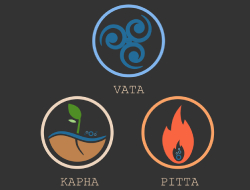
Doshas embody different combinations of the five elements: air, ether, fire, water and earth. Each of us contain all doshas to varying degrees, with one or two usually more prominent. An excess in any dosha usually leads to imbalances and disease.
Doshas will increase and decrease according to age. When it comes to children aged 1 to 12 that are at in the developmental stages, Kapha (the water element) is often the most prevalent. However, this dosha is prone to imbalance and aggravation, which leads to an excess in mucus in the system (this is why we consistently see children with runny noses). Mucus is necessary for the child’s development, which is why it is plentiful in their systems, but it may be problematic if in excess.
Other doshas might also be affected, like Pitta (fire) and Vata (air), and this is what Ayurveda is keen to investigate prior to prescribing any kind of treatment.
How Classical Ayurveda Names Children’s Health
Ayurveda has had a dedicated pediatric branch for over 2,500 years. Knowing the Sanskrit terms helps connect today’s common childhood complaints to a long, well-documented tradition.
Sanskrit Name – Kaumarabhritya
Meaning – Pediatric branch of Ayurveda
Modern Connection – One of the 8 classical branches; entire texts on children’s medicine
Sanskrit Name – Balaroga
Meaning – Diseases of children
Modern Connection – General term for childhood illnesses
Sanskrit Name – Balamruta
Meaning – Children’s nectar
Modern Connection – Classical herbal tonic for childhood immunity
Sanskrit Name – Suvarnaprashana
Meaning – Gold-administering ritual
Modern Connection – Traditional childhood immunity practice
Sanskrit Name – Stanyada
Meaning – Lactation enhancement
Modern Connection – Herbs and practices for breastfeeding mothers
Sanskrit Name – Krimi Roga
Meaning – Worm/parasite disease
Modern Connection – Traditional understanding of intestinal worms in children
Sanskrit Name – Lehana
Meaning – Honey-based oral tonic
Modern Connection – Method for delivering herbs to children via honey-paste
Common Ailments and Symptoms
Kapha Aggravation
Kapha, the water element, is pivotal for children’s development as it governs growth, lubrication, and fluid balance. Kapha also empowers memory, stability, and compassion. But Kapha that is produced in excess can clog up your child’s system with waste (ama). This mucus substance gets trapped in the cells, lymph nodes, and bone marrow, thus compromising the immune system and other bodily functions.

The following symptoms reveal such a Kapha aggravation in the child’s system:
- Runny nose
- Nasal congestion
- Sneezing
- Coughing (productive)
- Asthma and/or hay fever
- Salivary gland congestion
- Enlarged adenoids
- Bacterial infections
- Bloating with or without weight gain
- Over-sweating
- Hypersalivation (drooling)
- Sticky or watery stool
- Oversleeping, lethargy
- Slow movements, heaviness, lack of motivation
Pitta Aggravation
Pitta, the fire element, is responsible for your child’s ability to digest, absorb and assimilate food and nutrients. It is also the source of their enthusiasm, charisma, and physical energy. Excess Pitta, however, can result in the following symptoms:
- Digestive problems, like tummy aches and colic
- Diarrhoea and loose stools
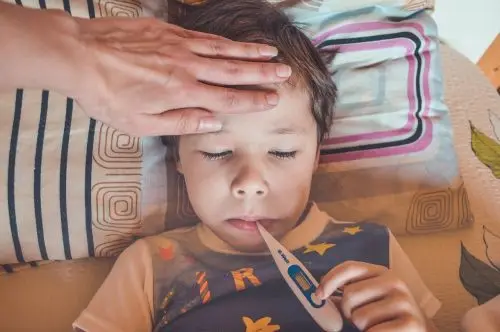
- Fever (though the root cause will need to be identified)
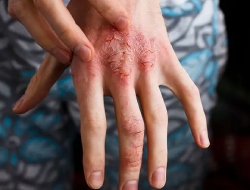
- Skin rash (eczema)
- Urticaria (hives)
- Inflamed tonsils
- Sore throat
- Ear infections
- Eye infections (particularly inflamed, bloodshot eyes)
- Measles
- Chickenpox
- Irritability, anger and tantrums
- Lack of enthusiasm or interest
Vata Aggravation
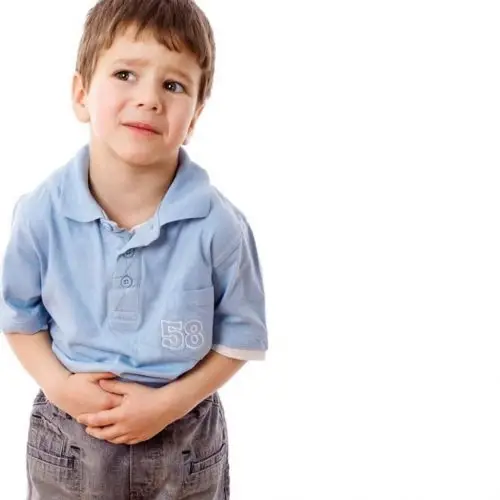
Vata, the air element, is the force that fuels movement, nervous impulse, and creativity. It is also responsible for your child’s optimal breathing and heart rate, as well as their sensory perception and communication skills. But an excess in Vata is known to produce symptoms such as:
- Head cold (as cold isn’t easily tolerated)
- Aching joints
- Dry skin which is overly sensitive
- Insomnia and sleeping disturbances
- Irregular appetite
- Being overly thin
- Cough (dry)
- Constipation
- Mental and physical restlessness (hyperactivity)
- Worry and/or anxiety
It is not unlikely for your child to develop symptoms of more than one aggravated dosha. As children change with age, one dosha can be more imbalanced than the other at any given time — even multiple doshas can be affected at the same time.
Quick Reference — Spot Your Child’s Pattern
Trying to work out what’s driving your child’s recurring symptoms? This scan-friendly table helps. Most children have a primary pattern, with two-dosha overlaps common.
Kapha-dominant
Key Signs: Mucus, congestion, productive cough, slow energy
Often Looks Like: The kid who ‘always has a runny nose’, plump, calm, slow to wake, prone to ear infections
Pitta-dominant
Key Signs: Inflammation, fever, eczema, intensity
Often Looks Like: The kid who runs hot, has eczema, gets ear infections fast, tantrums easily, sharp appetite
Vata-dominant
Key Signs: Dryness, sensitivity, restlessness, light sleep
Often Looks Like: The kid who is thin, hard to feed, anxious, light sleeper, dry skin, gets constipated
How Can Ayurveda Help Your Child?
Ayurveda can help balance your child’s dosha levels and relieve them of any associated symptoms and discomforts. This will be done according to a customised treatment plan that will take your child’s dosha, developmental stage, and delicate system into account.
For Kapha aggravation
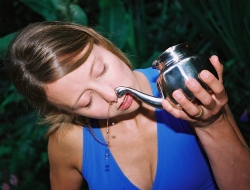
The Ayurvedic practitioner will prescribe all-natural nasal rinses and Kapha-balancing herbal medicine. Certain Kapha-aggravating eating habits, like excess dairy, will need to minimised, while an abundance of fruits, green and bitter vegetables, grains and legumes will be recommended as part of the new diet. For breastfeeding mothers, dietary recommendations may also be given.
For Pitta aggravation
Pitta-aggravating foods will need to be eliminated from the child’s diet and substituted with Pitta-decreasing foods, like milk, ghee, nuts, yoghurt and sweet fruit. Herbal medicine will also be prescribed, particularly if digestion is compromised. Natural Ayurvedic oils and ointments might also be given for children with eczema and skin inflammation.
For Vata aggravation
Children experiencing Vata aggravation symptoms will follow a similar treatment plan that includes dietary recommendations (particularly including liquids) and herbal medicine to stimulate the appetite and pacify the excessive air within the system. Natural, child-friendly oils may also be prescribed if the child’s skin is excessively dry, sensitive and dehydrated.
Worried about your child’s recurring symptoms? Have a free 10-minute call with Raman Das — no commitment, no pressure.
 1300 552 260
 WhatsApp
  Book online
Gentle Herbs Used in Pediatric Ayurveda
These herbs are prescribed individually with age-appropriate dosages by your Ayurvedic practitioner. Never give herbal preparations to a child without consulting a qualified practitioner — even gentle herbs need correct dosing for body weight and age. Stop and call us if any reaction occurs.
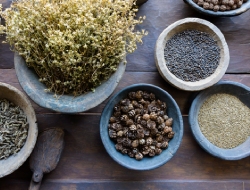
Yashtimadhu (Glycyrrhiza glabra) — Licorice
Gentle, naturally sweet, well tolerated by children. Used for cough, sore throat, mild digestive complaints, and as part of immunity-supporting formulas. Dosage is much smaller than adult dose.
Pippali (Piper longum) — Long Pepper
For Kapha-pattern coughs with mucus. Often combined with honey in a tiny dose (Lehana method). Gradually wakes up sluggish digestion in Kapha-dominant children.
Vasaka (Adhatoda vasica)
Classical Ayurvedic herb for productive coughs and bronchitis. Helps thin mucus and ease breathing in Kapha-aggravated respiratory conditions.
Vidanga (Embelia ribes)
Used traditionally for childhood intestinal worms (Krimi Roga). Always confirmed by stool test or pediatrician examination before treating.
Brahmi (Bacopa monnieri)
Child-safe cognitive support. Useful for school-aged children with attention difficulties, mild anxiety, or sleep restlessness. Gentle when properly dosed.
Shankhpushpi (Convolvulus pluricaulis)
Calming and grounding for hyperactive or restless children. Supports sleep without being sedating. Used in Vata-pattern children.
Bala (Sida cordifolia) — “Strength for Child”
The Sanskrit name literally means ‘strength’ specifically in the context of building a child’s vitality. Nourishing tonic for thin, weak, or recovering children. Used in food-based form rather than concentrated extracts.
Bhringraj (Eclipta alba)
Traditional scalp and hair oil for babies and children. Soothes the scalp, supports healthy hair growth, calming when massaged in. Available as Bhringraj Hair Oil at Yatan.
Shankhpushpi Herbal Oil
External application — calming, grounding, supports nervous system. Used in evening oil massage for restless or anxious children.
What Ayurveda Looks Like at Different Ages
Treatment shifts as your child grows. Here’s a general structure — actual prescriptions are personalised by consultation.
Age: Newborn–12 months
Common Concerns: Colic, sleep, eczema, cradle cap, breast-feeding support
Main Approaches: Mostly via mother’s diet, external Bhringraj oil for cradle cap, no internal herbs without pediatrician input
Age: 1–3 years (toddler)
Common Concerns: Recurrent colds, mucus, eczema, sleep, fussy eating
Main Approaches: Very gentle Yashtimadhu in honey, child-friendly oil massage, dietary adjustments
Age: 4–7 years
Common Concerns: Adenoids, ear infections, eczema, anxiety, picky eating
Main Approaches: Wider herb range at small doses (Brahmi, Bala), Neti pot training begins around age 5-6 with supervision
Age: 8–12 years (pre-teen)
Common Concerns: Attention difficulties, sleep, school stress, recurring colds, early hormonal shifts
Main Approaches: Brahmi/Shankhpushpi for focus & calm, full daily routine (oil massage, age-suited yoga), dietary structure
The Ancient Practice of Baby Oil Massage
Abhyanga — warm oil massage — is one of the oldest practices in Ayurveda and has had a quiet revival in modern parenting. Across South Asia it has been continuous; everywhere else it’s being rediscovered as research catches up with what families always knew.
What it helps with
- Calmer, deeper sleep
- Better weight gain in thin or premature babies
- Skin moisturisation, fewer eczema flares
- Bonding between caregiver and baby
- Reduced colic in some infants
- Soothing for hyperactive or anxious children
- Joint and muscle development
How to do it (general guide)
- Use food-grade sesame oil for cooler weather, coconut oil in warm weather, or a child-safe Ayurvedic oil like Lakshadi
- Warm a small amount in your hands (test on your wrist — comfortably warm, never hot)
- For babies: 5-10 minutes of gentle strokes, before a warm bath
- For older children: 10-15 minutes, especially scalp, feet, joints
- Best done in a warm room with no draughts
- After massage, warm bath or shower
Important: Always check with your pediatrician before starting oil massage on babies under 3 months or any child with a skin condition that’s currently inflamed or weeping. Never massage over a recent vaccination site for 24 hours.
How These Approaches Work Together
Western Pediatric Medicine
- First choice for: Vaccinations, acute infections, fever investigations, emergencies
- Antibiotics: Used for confirmed bacterial infection
- Eczema: Steroid creams, antihistamines
- Colic: Reassurance, simethicone drops
- Bed wetting: Wait-and-see, alarm therapy, desmopressin
- Recurring colds: Symptom relief; vigilant for complications
- Hyperactivity / attention: Behavioural therapy; sometimes stimulant medication
- Body type matching: Not part of treatment
- Best for serious illness: Absolutely the first stop
Ayurvedic Approach
- First choice for: Recurring patterns, constitutional weakness, mild chronic conditions, prevention
- Antibiotics: Rebuild immunity after antibiotic courses; reduce recurrence
- Eczema: Internal Pitta-cooling, external coconut oil, dietary adjustments
- Colic: Carminative herbs in mother’s diet, gentle abdominal oil massage
- Bed wetting: Bladder-strengthening herbs, evening fluid management, Vata-pacifying routine
- Recurring colds: Strengthen immunity, address Kapha pattern, dietary changes
- Hyperactivity / attention: Brahmi/Shankhpushpi, calming routine, dietary triggers identified
- Body type matching: Customised by dosha and age
- Best for serious illness: Not for acute serious illness; see your GP first
These approaches are complementary. Keep your pediatrician/GP for vaccinations, acute infections, fevers needing investigation, and anything serious or worrying. Add Ayurvedic care for the recurring, low-grade, constitutional patterns where Western medicine has fewer options.
Eating Patterns for Each Dosha Aggravation
General principles — your personalised plan will be more specific.
For Kapha-aggravated children (mucus-prone)
- Help: Warm cooked vegetables, bitter greens, ginger tea, honey (over age 1), light grains, lentils, fresh fruit (not too sweet)
- Reduce: Excess dairy, bananas, fried foods, cold drinks, refined sugar, heavy wheat products
For Pitta-aggravated children (inflammation-prone)
- Help: Cooling foods — milk, ghee, soaked nuts, yoghurt, sweet ripe fruits (mango, pear, sweet apple), coconut, leafy greens
- Reduce: Spicy foods, sour foods (vinegar, fermented things), excess salt, fried foods, citrus, tomato in eczema cases
For Vata-aggravated children (dry/restless)
- Help: Warm cooked foods, soups, mild spices, ghee, dates, ripe bananas, milky drinks, oats, sweet potato, regular meal times
- Reduce: Raw cold food, popcorn, dry crackers, excess fruit, irregular eating, late-night meals, skipped meals
Note: Any major dietary change — particularly elimination of dairy or grains — should be discussed with your GP or a pediatric dietitian. We make adjustments gradually and never compromise a child’s overall calorie and nutrient intake.
An Ayurvedic Daily Rhythm
Children thrive on routine. Gentle Ayurvedic template — adapt to your family’s schedule.
Time: 6.30–7.00am
Practice: Wake up, warm water sip
Why: Sets natural rhythm; gentle digestive wake-up
Time: 7.00am
Practice: Oil massage (Abhyanga) before bath, 2-3x per week
Why: Calms nervous system, moisturises skin, supports sleep that night
Time: 7.30am
Practice: Warm bath/shower, gentle stretches
Why: Removes excess Kapha, energises the morning
Time: 8.00am
Practice: Warm cooked breakfast
Why: Steady energy through morning
Time: 12.30pm
Practice: Largest meal of the day
Why: Aligns with strongest digestive fire (Agni)
Time: 3.30pm
Practice: After-school snack — warm if possible
Why: Steady afternoon energy; avoid cold sweet snacks
Time: 6.00pm
Practice: Light early dinner
Why: Easy digestion before sleep
Time: 7.30pm
Practice: Quiet wind-down, no screens
Why: Allows Vata to settle
Time: 8.00pm
Practice: Bedtime story, gentle scalp oil
Why: Calming routine; consistent sleep onset
Time: 8.30pm
Practice: Sleep (toddlers earlier)
Why: Sleep before Pitta time (10pm) supports growth and hormone balance
How Long Until We See Changes?
Children typically respond faster than adults because their tissues are more responsive. Approximate timelines:
Colic in babies
Often noticeable improvement in 1-2 weeks of mother’s dietary changes and gentle abdominal oil
Recurrent runny nose / mild Kapha
2-4 weeks of dietary changes + Neti practice (older children) shows visible improvement
Eczema in children
3-8 weeks for initial improvement, 3-6 months for stable resolution depending on severity
Bed wetting
Slower — 2-4 months of consistent routine and herbs typically needed
Hyperactivity / attention
4-8 weeks for initial calming, ongoing maintenance through to teenage years
Constipation / digestive
1-3 weeks for routine improvement, longer if entrenched
Recurrent ear infections / adenoid
2-3 months for pattern shift; severe cases may still need ENT review
Always discuss with your pediatrician: if your child is currently on prescribed medication, has a serious chronic condition, or if symptoms worsen at any point. Ayurvedic care runs alongside conventional care — never instead of it.
Pricing
Children’s consultations include time with parent/caregiver. Most families start with the free 10-minute call.
Free 10-Minute Phone/Video Consultation
FREE
Initial Ayurvedic Consultation (60 min)
$139 AUD
Standard Follow-up (30 min)
$81 AUD
Short Follow-up (15 min)
$51 AUD
Bhringraj Hair & Scalp Oil (child-safe)
$37.95 AUD
Shankhpushpi Herbal Oil (calming)
$37.95 AUD
Customised child-safe herbal preparations
Varies by prescription
Neti Pot (for children 6+ with supervision)
$39.95 AUD
How is Ayurveda Different to Western Medicine?
Ayurveda is a fundamentally holistic, personalised, and preventative approach. It is also 100% natural and side-effect free, so you, as a parent or caretaker, can rest assured that your child is being prescribed the safest form of medicine.
Unlike Western Medicine that prescribes a ‘one-fits-all’ treatment, Ayurveda treats the patient as a unique individual and constitution thanks to its dosha philosophy.
Ayurveda also has the added benefit that a single treatment can revitalise the entire system. For instance, if your child is troubled by chronic sinusitis and congestion, the Ayurvedic treatment prescribed may not only help rid the excess mucus, but also stimulate digestion, boost physical energy, encourage cell production, and optimise organ function. What greater joy is there than to see your child healthy and happy?
Practitioner’s Clinical Experience
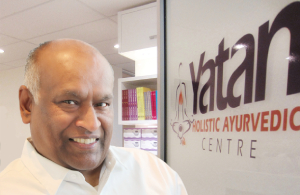
“In my clinic I have found that the Ayurvedic system has been very helpful in the management of common childhood ailments, for example — colic, bed wetting, jaundice, anaemia, constipation, diarrhoea, eczema, dry skin, adenoid problems, blocked nose, anxiety, mental stress, sleep disturbance, hyperactivity and loss of appetite.” – Raman Das Mahatyagi, Principal Ayurvedic Practitioner

Conditions We Help With
For deeper information on specific childhood conditions:
- Adenoid problems
- Eczema
- Colic
- Bed Wetting
- Jaundice
- Anaemia
- Constipation
- Blocked nose, cough / colds
- Loss of appetite
- Anxiety and mental stress
- Hyperactivity / ADD
Common Parent Questions
Q: Is Ayurveda safe for children?
A: Yes — when prescribed by a qualified practitioner with age-appropriate dosages. Ayurveda has a dedicated pediatric branch called Kaumarabhritya with over 2,500 years of documented use. Herbs are dosed by weight and age. We avoid herbs not suited to children even in adult formulas. We don’t sell herbal medicines for children online without consultation — every pediatric prescription is individualised.
Q: At what age can my child start Ayurvedic care?
A: From birth — usually via the mother (breastfeeding diet, oil massage techniques, dosha-based bathing routine). Internal herbs for the child start later: very gentle herbs with wider options from age 3, and the full pediatric range from school age. Always confirm with your pediatrician before starting any new approach.
Q: Can Ayurveda help my child’s recurring colds?
A: Yes — recurring colds usually point to a Kapha-dominant pattern (very common in children 1-12). The approach: reduce mucus-producing foods (especially excess dairy), warm cooked meals, daily oil massage to support immunity, age-appropriate herbs like Yashtimadhu or Pippali (in honey, over age 1), and Neti pot training for school-age children. Most families see fewer colds within 2-3 months.
Q: What’s Ayurveda’s approach to eczema in babies and children?
A: Eczema is typically a Pitta-Kapha pattern in children. Internal: cool the inflammation with Pitta-pacifying diet (avoid excess sour/spicy), gentle herbs prescribed individually. External: coconut oil, ghee-based ointments, Ayurvedic oils like Lakshadi. The mother’s diet matters for breastfed babies. Always continue any pediatric dermatology care concurrently — we work alongside, not instead of, your specialist.
Q: Will Ayurveda interfere with my child’s medications or vaccines?
A: Generally no, but always tell us what your child is taking at the first consultation. Some herbs can interact with specific medications, and we adjust accordingly. For vaccines, we do not avoid them — Ayurveda has a long tradition of immunity support (Suvarnaprashana) that runs alongside conventional immunisation. We don’t promote vaccine avoidance under any circumstances.
Q: My child is on the autism spectrum or has ADHD — can Ayurveda help?
A: Ayurvedic care can support some symptoms — particularly sleep, digestion, anxiety, and overstimulation — but it doesn’t treat autism or ADHD as diagnoses. We work alongside your child’s pediatrician, occupational therapist, or psychologist. Brahmi and Shankhpushpi at appropriate doses can support focus and calm in some children. Realistic expectations, honest reporting, and team coordination are essential.
Q: Can babies have oil massage?
A: Yes — Abhyanga (baby oil massage) is one of the oldest practices in Ayurveda and has had a quiet revival in modern parenting. Use food-grade sesame oil (cool weather) or coconut oil (warm weather). Test the temperature on your wrist. Always check with your pediatrician for babies under 3 months. Never massage over recent vaccination sites for 24 hours. Don’t massage when the baby is unwell or right after feeding.
Q: Can I do this remotely via telehealth?
A: Yes. Yatan offers telehealth consultations Australia-wide. Pediatric consultations work well via video — Raman Das can observe your child’s behaviour, skin tone, eyes, and breathing pattern. Child-safe herbs and oils are posted directly to you. For very young babies or complex cases, we sometimes recommend at least one in-person visit.
Q: Do you treat babies under 6 months?
A: Yes, but indirectly — mostly through the mother (diet, lactation support, oil massage technique). The focus at this age is the breastfeeding mother’s constitution, postnatal recovery, and external care for the baby.
Q: My child won’t drink anything bitter — how does this work?
A: Most pediatric herbs at Yatan are formulated to be tolerable for children. Lehana method (herb mixed in honey, over age 1) works for bitter herbs. Powders go into warm milk or ghee. Pastes into stewed apple or banana. We adjust delivery to what your child will actually accept — there’s no point prescribing something they won’t take.
Q: What if my child refuses the treatment?
A: Common and not a problem. We adjust delivery — different flavours, oil massage instead of internal, dietary changes through favourite foods, parents leading by example. Children often respond to routine first; the herbs slot into the routine once it’s established. There’s no force involved.
Q: How much does pediatric care typically cost?
A: Free 10-minute initial call, then $139 for the first 60-minute consultation (which usually covers both parent and child for the first session). Standard follow-ups are $81 (30 min) or $51 (15 min). Herbal preparations are an additional cost based on prescription.
Start With a Free 10-Minute Call
We know choosing care for a child takes thought. Book a free 10-minute call — no pressure, no commitment. Raman Das will tell you honestly whether Ayurvedic care suits your child’s situation, and what a sensible next step would be.
 Suite 28, 924 Pacific Highway, Gordon NSW 2072
  Available Australia-wide & internationally
  Mon–Fri: 9:00am–5:30pm
 More Reading on Children’s Health
- Childhood Stress Management / Depression and Anxiety Disorders in Children Symptoms
- Children Bed Wetting at age 6 | Adults Wetting the Bed Treatment
- What is Colic in babies? Symptoms and Treatment
- Signs of Tooth Decay In Children Treatment
- Blocked Ear Pain | Middle or Inner Ear Infection Treatment
- What Causes Eczema Symptoms? | Eczema in babies | Eczema Rash Treatment & Diet
- Tonsils and Adenoids (Sore Throat pain) Treatment
- Constipation Symptoms (Causes) Treatment Relief
- Anorexia Symptoms (Lack) Loss Of Appetite Causes Treatment
Reviewed by Raman Das Mahatyagi, Principal Ayurvedic Practitioner | Last updated: 14 May 2026