















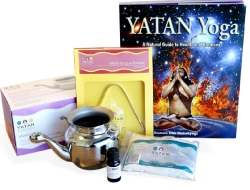




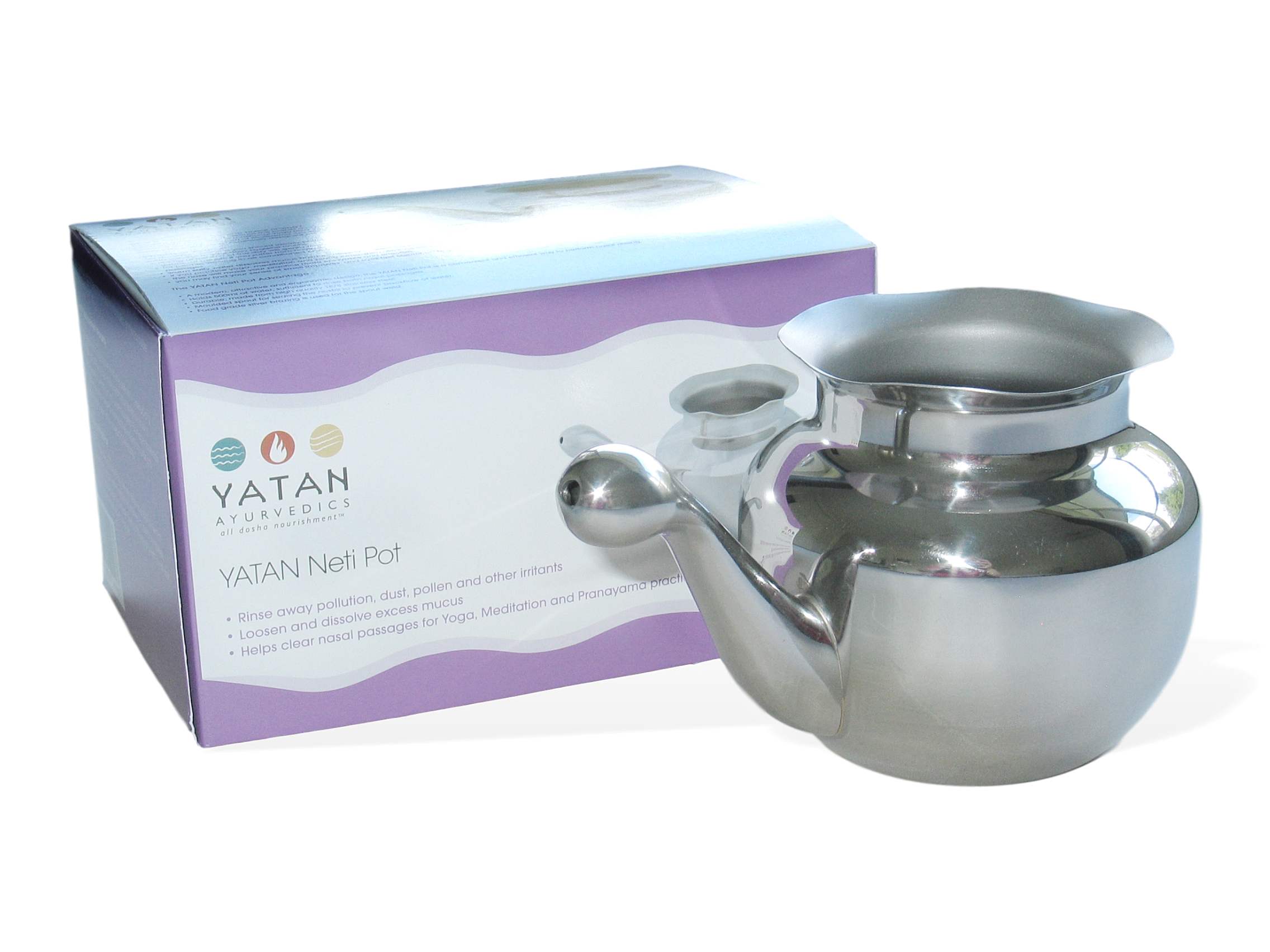

Yatan Stainless Steel Neti Pot – 400ml, for Saline Nasal Cleansing
Trusted by 250+ patients in Australia

4.6/5 (Google Reviews)
$39.95In stockSKU: YA-NET-STS
- 18/8 stainless steel — Food-grade, unbreakable
- 400ml — Rinses both nostrils without refilling
- Designed by a practitioner — Raman Das Mahatyagi, 30+ years in Ayurveda
- Shipped from Sydney — Australian stock, dispatched within 1 business day
Quick answer
A neti pot is a small vessel used to pour warm saline solution through the nasal passages, rinsing away mucus, allergens and airborne pollutants. The practice is called Jala Neti and is one of the classical Shatkarma cleansing techniques of yoga and Ayurveda.
The Yatan Stainless Steel Neti Pot is made from 18/8 food-grade stainless steel, holds 400ml (enough to rinse both nostrils without refilling), and has a uniquely shaped spout that seals the nostril to prevent backflow. It costs $39.95 AUD, ships from Sydney, and is designed by Ayurvedic practitioner Raman Das Mahatyagi. Use only distilled, sterile, or previously boiled and cooled water — never untreated tap water.
About the product
What is the Neti Pot for Nasal Cleansing and Nasal Passages?
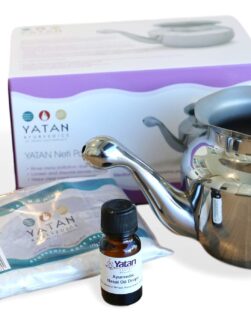
The Yatan Neti Pot is an Ayurvedic health product that can be used daily to maintain and enhance the health of your nasal cavities, and to support comfort during nasal allergies, sinus problems or colds.
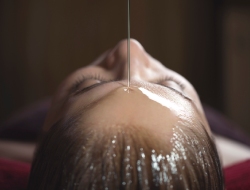
Jala Neti (nasal cleansing using warm salty water) is a traditional part of the yoga system and of the daily routine prescribed by Ayurveda. It is one of the six classical Shatkarma purification practices, used for thousands of years for its physical benefits, which in turn enable deeper, more effective spiritual practice.
The Yatan Neti Pot provides a simple and effective way to perform saline nasal rinsing. We selected quality 18/8 stainless steel as the best material for the purpose.

Specifications
- Material
- 18/8 (304) food-grade stainless steel
- Capacity
- 400ml - sufficient to rinse both nostrils without refilling
- Spout
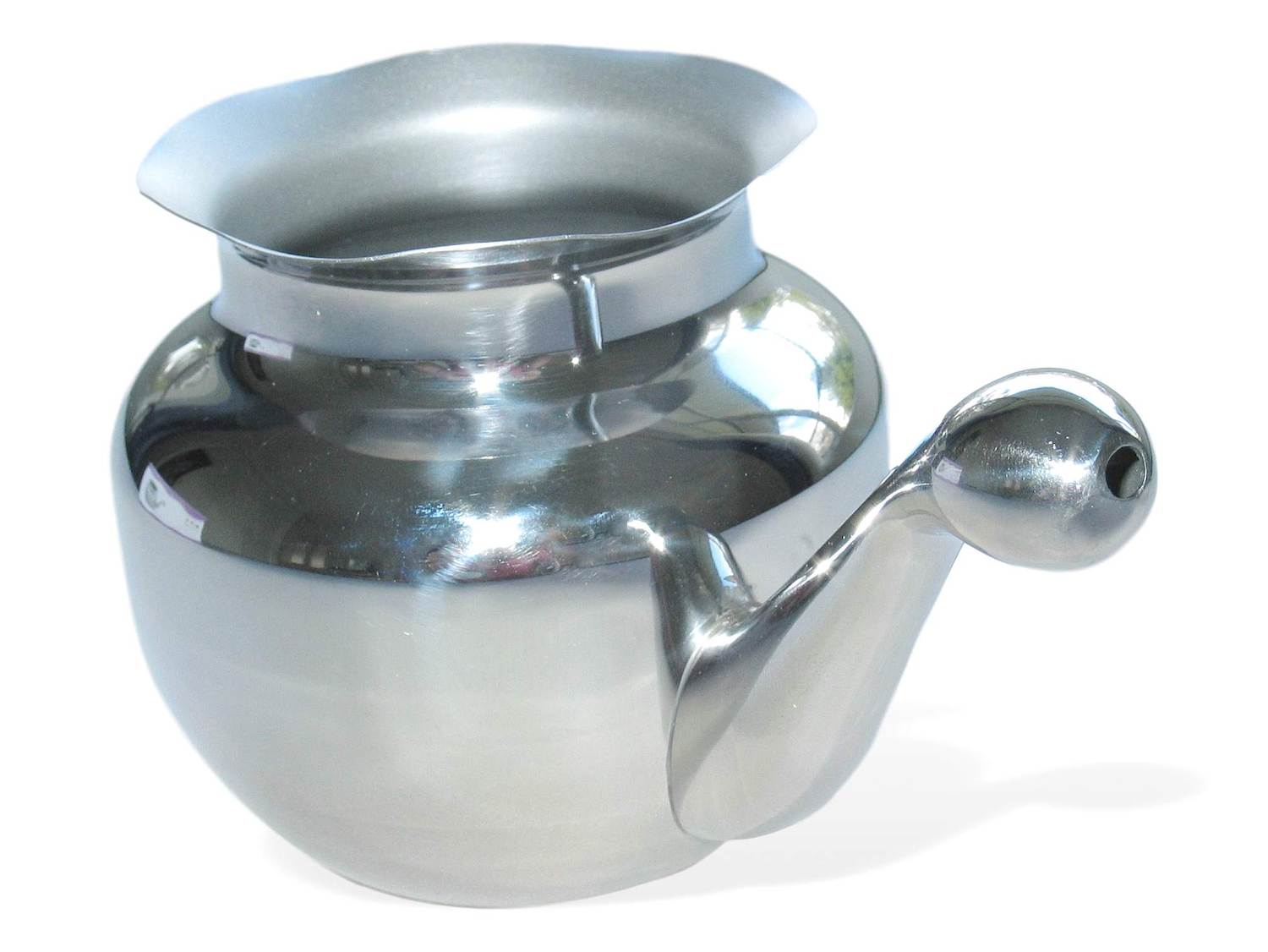
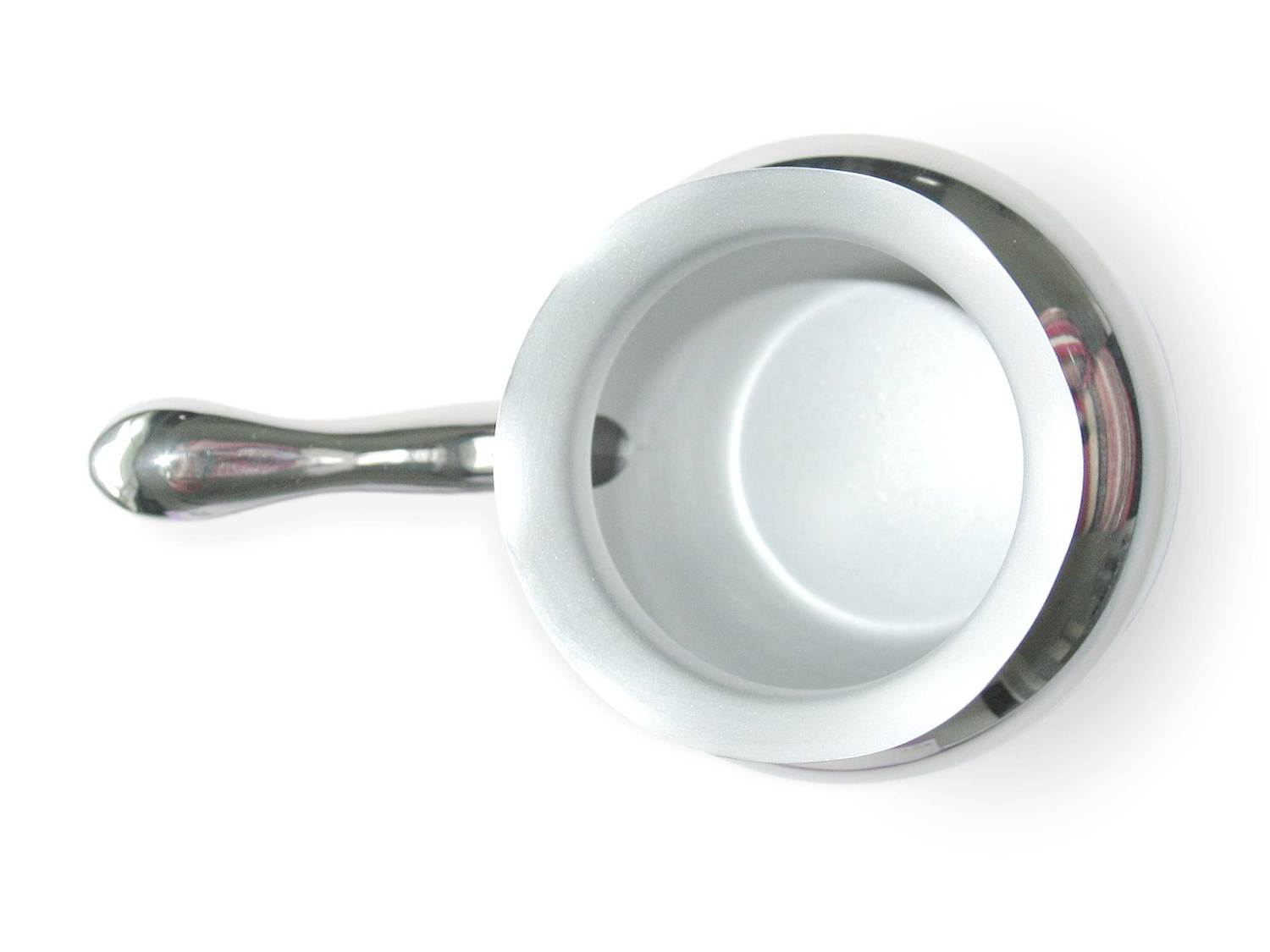
- Uniquely shaped to seal the nostril and prevent backflow; angled to avoid spillage
- Dishwasher safe
- Yes
- Country of manufacture
- Australia
- Brand
- Yatan
- Designed by
- Raman Das Mahatyagi, Ayurvedic practitioner
- SKU
- YA-NET-STS
- Weight
- 196 g
- Price
- $39.95 AUD
Why a Stainless Steel Neti Pot?
There are a number of advantages to a stainless steel neti pot compared to ceramic, copper or plastic:
- Easy to keep clean — copper constantly tarnishes, which makes it difficult to clean inside the pot
- Virtually unbreakable — ceramic is heavy and needs care in the bathroom
- Non-porous and food-grade — will not harbour bacteria in surface pores the way unglazed ceramic can
- Will not leach or degrade — unlike plastic, which can discolour and retain odours over time
- Lifetime product — with correct care it will not need replacing
| Criterion | Stainless Steel (Yatan) | Ceramic | Plastic |
|---|---|---|---|
| Durability | Virtually unbreakable | Breaks if dropped | Cracks and stains over time |
| Cleaning | Easy, non-porous | Glaze can chip; porous if unglazed | Retains odours |
| Weight | Light and easy to hold | Heavy | Very light |
| Lifespan | Lifetime | Years, if not dropped | 1–2 years typical |
| Travel | Excellent | Risky | Good |
| Typical price | $39.95 | $20–45 | $10–20 |
What are the special features of the YATAN Stainless Steel Neti Pot?
We have carefully designed our YATAN Neti Pot to meet a number of important criteria:
- It holds around 400ml of water - large enough to rinse both nostrils without refilling
- It is comfortable to hold, either at the base or around the rim of the pot
- The spout is a unique design, shaped to seal the nostril and avoid backflow of water from the nostril you are rinsing
- It has a correctly angled spout to avoid spillage from the top of the pot
- It has a curved, modern and attractive design
This is the one to get. I tried another and the volume of water was too small; most importantly the bulb on the end was also too small, resulting in a poor seal. This Neti Pot is well made and will last a lifetime.
How To Use A Neti Pot - Step by Step
-
Prepare the solution.
Fill the neti pot with 400ml of lukewarm distilled, sterile or previously boiled and cooled water. Add half to one level teaspoon of additive-free rock salt and stir until fully dissolved. The solution should taste mildly salty, like tears — too little salt stings, too much dries the membranes.
-
Position yourself.
Stand over a sink or in the shower. Lean forward from the waist and tilt your head to one side so that one nostril is directly above the other. Keep your forehead roughly level with, or slightly higher than, your chin.
-
Insert and pour.
Place the spout gently into the upper nostril so it forms a comfortable seal. Open your mouth and breathe steadily through it — do not breathe through your nose. Tilt the pot so the water flows into the upper nostril and drains out of the lower one.
-
Use half the water, then clear.
Pour approximately half the pot through, then remove the spout and gently blow your nose without pinching either nostril closed. Blowing too hard, or with one nostril blocked, can force water into the ears.
-
Repeat on the other side.
Tilt your head the other way and repeat with the remaining solution.
-
Dry the nasal passages.
Blow your nose gently several times. To clear any remaining water, bend forward and turn your head from side to side. Traditionally this is completed with Kapala Bhati breathing - see the FAQ below.
-
Apply nasal drops.
Apply a few drops of nasal oil to seal and protect the mucous lining. This is an important final step in the Ayurvedic method and helps prevent dryness.
-
Clean your pot.
Rinse with warm soapy water, dry inside and out, and leave upside down to drain fully.
What are the benefits of saline nasal rinsing?
All ear, nose and throat problems originate in the mucus lining of the sinuses. Regular nasal cleansing not only improves the sense of smell, but eyesight and memory can also benefit. Saline nasal rinsing helps flush allergens, dust and airborne pollutants from the nasal passages, and is widely used to support comfort in a range of sinus-related conditions. Nasal drops should be used after cleansing to seal the mucus lining, helping to prevent atmospheric pollutants from penetrating it.
Read more: The Many Benefits of the Neti Pot · How to Use a Neti Pot — benefits of Jala Neti and the latest scientific research
Regular practice may help with:
- Clearing everyday nasal and sinus congestion
- Rinsing pollen and dust during hay fever season
- Comfort during colds and after air travel
- Encouraging nose breathing rather than mouth breathing
- Supporting deeper, more relaxed breathing and pranayama practice
- Reducing reliance on decongestant sprays
What else you need
To make a saline solution it is important to use an additive-free salt. Table salt contains iodine and anti-caking agents that irritate the nasal membranes. Our Ayurvedic Rock Salt is the ideal choice for both nasal rinsing and cooking.
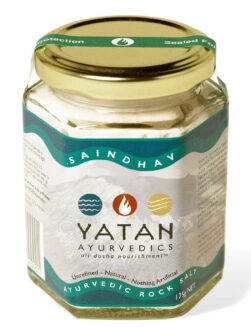
Ayurvedic Rock Salt - 100% Natural and Pure
Natural Rock Salt benefits to you Ayurvedic / Natural Rock Salt is Sweet, cooling, light, carminative and digestive and is recommended for all dosha types. Being less heating…
Customer reviews
What owners say
4.5 out of 5 — based on 5 reviews
Reviews
Only logged in customers who have purchased this product may leave a review.
Customer testimonials
I wanted to let you know I have received my neti pot and it is beautiful. Thank you so much for your wonderful customer service. I used a neti today and it is very easy with no pain. I'll be glad to get it to my mom and grandson. I'll be sharing your neti information with everyone at work and hope they will be interested in your neti pots also.
Thank you, I'm sure I'll like it. It seemed to be the best quality netipot I could find available.
Thanks for the contact, I am looking forward to the better quality neti pot. The use of one has greatly helped my allergies and sinus condition over the past few months.
Write a review — only verified purchasers can leave a review, once signed in.
Sign in to reviewNeti Pot FAQ
What water should I use in a neti pot?
Use only distilled or sterile water, previously boiled water that has been cooled to lukewarm, or water filtered through a filter with an absolute pore size of 1 micron or smaller. Do not use untreated tap water for nasal rinsing — the nasal passages lack the defences the digestive system has, and rinsing with untreated water carries a rare but serious infection risk.
How often should I use a neti pot?
As a rule, once daily in the morning. In a hot climate it may be beneficial at any time of day. It should not be used when it is raining or in conditions of high humidity. Some people use it twice daily during hay fever season or a cold — if you notice dryness or irritation, reduce the frequency.
Why is rock salt used instead of table salt?
Rock salt has a high level of potassium and other minerals, and while it is extremely penetrative and efficient in removing toxins, it does so without disturbing the pH of the nasal membranes. Table salt contains iodine and anti-caking agents that can irritate the nasal lining. Use around half to one level teaspoon per 400ml.
What if water gets stuck in the nasal passage?
This is usually caused by sinus blockage or inflammation. With continued use the problem should resolve itself. It often helps to add an extra spoon of rock salt. It is also helpful to do 5 rounds of Hastha-Kati Chakrasana (see the yoga book “Yatan Yoga Therapy”).
What if more mucus is produced than expected?
Keep going — this can only be a good sign. Your body obviously needs to rid itself of excess mucus.
What is the best way to blow the nose to completely rid it of water?
Do 21 rounds of Kapala Bhati (see the yoga book “Yatan Yoga Therapy”). Blow gently and never pinch one nostril closed while blowing, as this can force water into the ears.
When is the best time to use the neti pot?
As a rule, in the morning, but in a hot climate it may be beneficial at any time of the day. It should not be used when it is raining or in conditions of high humidity.
Who can use the neti pot?
Most people can, including children under supervision. If you have had recent nasal or sinus surgery, a perforated eardrum, or an acute ear infection, speak to your doctor first.
Why should nasal drops be used afterwards?
After cleansing the nasal passages, nasal drops help restore and maintain the natural moisture, protective barrier, and healthy pH of the nasal membranes. This supports the nose’s natural defence against bacteria, fungi, allergens, and environmental pollutants, while helping the nasal passages filter and condition the air you breathe.
Is a stainless steel neti pot better than ceramic or plastic?
Stainless steel is non-porous, virtually unbreakable, easy to clean and will last a lifetime. Ceramic breaks if dropped and can be heavy; plastic retains odours and typically needs replacing every year or two. Copper tarnishes constantly, which makes the inside difficult to clean.
How much water does the Yatan neti pot hold?
It holds around 400ml – large enough to rinse both nostrils without refilling. Many competing pots hold 200–250ml, which requires a refill partway through.
How do I clean my neti pot?
Rinse thoroughly with warm soapy water after every use, dry completely inside and out with a soft cloth, and air dry upside down so all water drains from the spout. Proper drying prevents salt residue buildup that may cause surface rust around the spout joint.
Where do you ship?
We ship Australia-wide for a flat shipping cost of $9.95. We also ship internationally and will provide a quote for international postage and customs duties based on your location.
Can I use a neti pot when I have a cold?
Many people find saline rinsing comfortable during a cold, as it helps clear congestion. Do not use it if you cannot breathe through your nose at all, or if you have an ear infection. Stop and seek medical advice if you experience pain, bleeding or fever.
Disclaimer: If you suffer any chronic ear, nose or throat problems such as sinusitis, you should seek medical advice. Nasal rinsing should not be considered a substitute for medical assessment and treatment. Always follow the water safety guidance above.
Reviewed by Raman Das Mahatyagi, Principal Ayurvedic Practitioner | Last updated:
Rohan C. –
Rajesh T. –
Raman Das D. –
Tim (verified owner) –
Raman Das D. –
Frederick S. –
Raman Das D. –
I am very happy that you received the neti pot quickly and are happy with it. A lot of thought went into the design of it to give a high quality product.
G.S –
Raman Das D. –
You’re welcome and I’m glad you have found it to be beneficial.