








What is a Langota?
Wearing the Langota
|
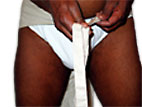
1. Take the Langota and put it against your pelvis/lower back area with the long edge of the triangle against your back.
2. Then hold the two straps from the hips and bring them together in front of you.
|
 Langota |
| 3. Hold the straps with one hand and with the other bring the “tail” up between the legs and thread under the straps and hold it up under the chin. |
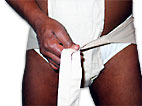 Langota |
| 4. Thread the straps to form a half knot. |
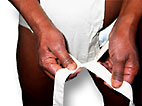 Langota |
| 5. Pull the straps tightly in as shown above |
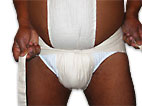 Langota |
| 6. Whilst still holding the straps bring the left hand round to rest on the left hip and bring the right hand around the body to meet with the left hand. Cross the straps over and pass the right hand around the body once more tying the straps in front of the left hip. |
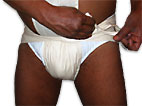 Langota |
| 7. Release the “tail” from under the chin and pull down over the straps to tighten it between the legs.8. Pull the “tail” through the legs so it is folded back on itself, and bring it up to the straps at the back. Whilst doing this it is important for men to make sure that the genitals are balanced. |
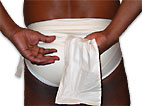 Langota |
| 9. Thread the “tail” through the straps, tightening it again, and then wrap the excess length of the “tail” around the straps, maintaining the tightness all the time. |
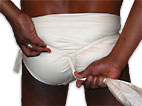 Langota |
| Final view of fitted langota from the back |
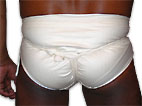 Langota |
| Final view of fitted langota from the front |
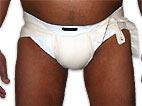 Langota |
Benefits:
Contraindications:
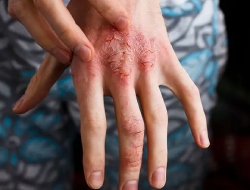
- In the case of aggravated eczema around the waist or in the groin the Langota should not be worn.
- In the case of hydrocele, fluid retention in the testicles, where the size of the testicles becomes uneven, the Langota can be worn but should be tied to the comfort of the individual and both testicles must be level and balanced.
- In the case syphilis and gonorrhea or other STDs it should not be worn.
- In the case of hydrocele surgery, pelvic injury or surgery and fractured femur it should not be worn.
- In the case of intestinal hernia it should be worn carefully.
- During pregnancy it should not be worn.
Women and Langota:
Langotas can be purchased from our online store
Frequently Asked Questions
What is the purpose of langota?
The langota is a traditional piece of Vedic clothing, which is worn like an underwear. Its purpose is to provide support and stability and is commonly worn by men engaged in various physical activities, such as sports, exercise and yoga.
Is langota good for health?
Yes, wearing a langota may have potential health benefits. It helps minimise discomfort and provide support during physical activities, reducing the risk of injuries.
How do you wear an Indian langota?
Please refer to the above section – Wearing the Langota to understand how to wear an Indian Langota with pictures.
What are the benefits of wearing langota for men?
The langota offers significant benefits to men as it provides support to the nervous system, spine, and internal organs when worn and securely fastened. By doing so, it effectively prevents the displacement of bones and organs and minimises nerve strain during physical exercise or yoga practice. This translates to enhanced stability and comfort during various activities.
When should men wear langota as supporters?
Men typically wear langotas during activities that involve physical exertion, such as:
- Sports and athletics
- Exercise and workouts
- Martial arts and yoga
- Activities that involve jumping, running, or repetitive movements
Is langot necessary for running/yoga?
Langotas have been commonly worn during yoga in India since Vedic times and brings numerous benefits. Some individuals find that wearing a langota provides them with additional support and reduces friction during these activities.
Can women wear langota?
Traditionally, langotas are designed and worn by men. Women have their own types of undergarments and support garments that are suited to their specific needs. However, there is no strict rule against women wearing langotas.
What is the best fabric for langota?
Langotas are usually made from soft and breathable fabrics like cotton or cotton-blend. These fabrics provide comfort, allow proper airflow, and offer flexibility during physical movements.
Can we wear langota all day?
While langotas are designed to provide support during physical activities such as yoga, it’s not recommended to wear them all day long.
How tight should langota be?
A langota should fit you properly without being overly tight. It should provide enough support and stability without causing discomfort or constriction.